
10 min read
Car Won't Start but Battery Is Fine? 8 Possible Reasons
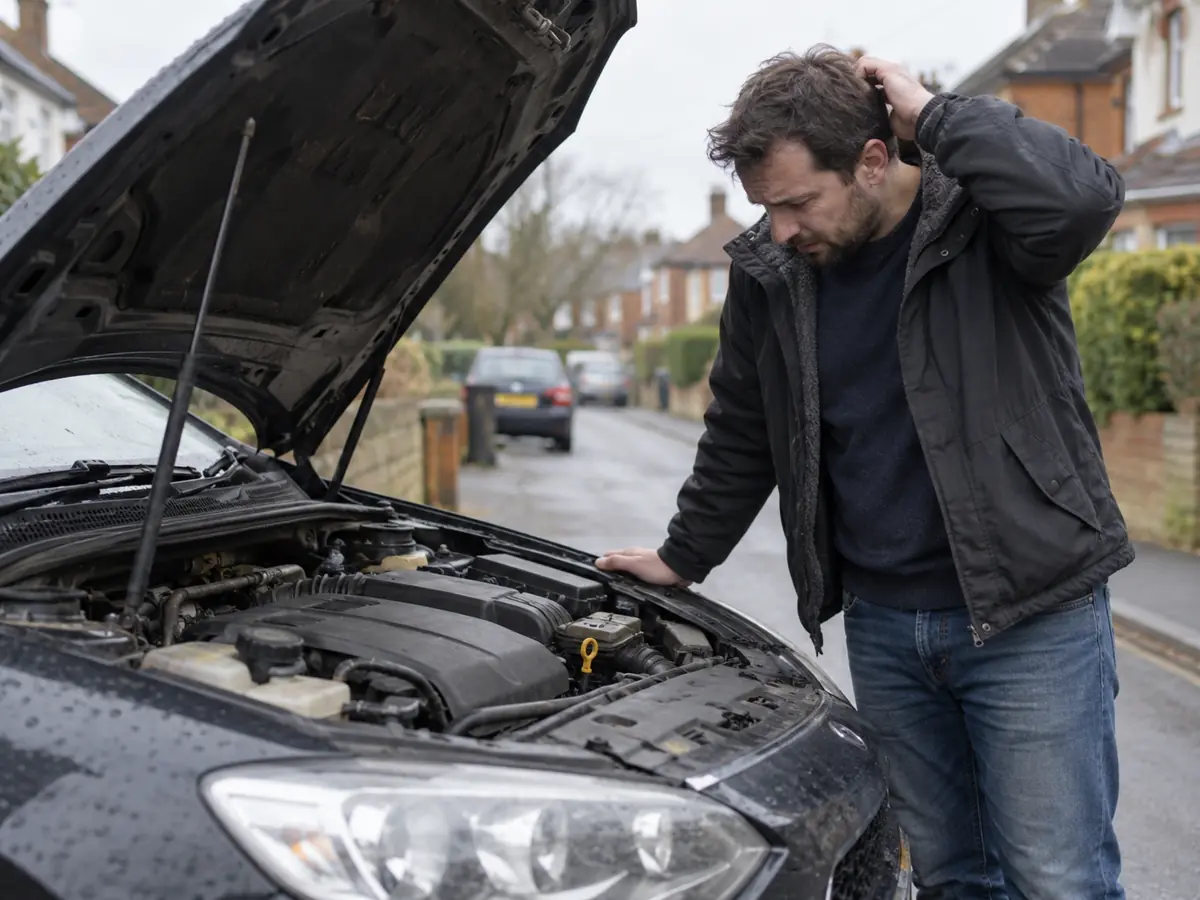
Car won't start but the battery seems fine? Here are 8 possible causes, what the clicking sounds mean, safe checks to make, and when to call for help.
Read Article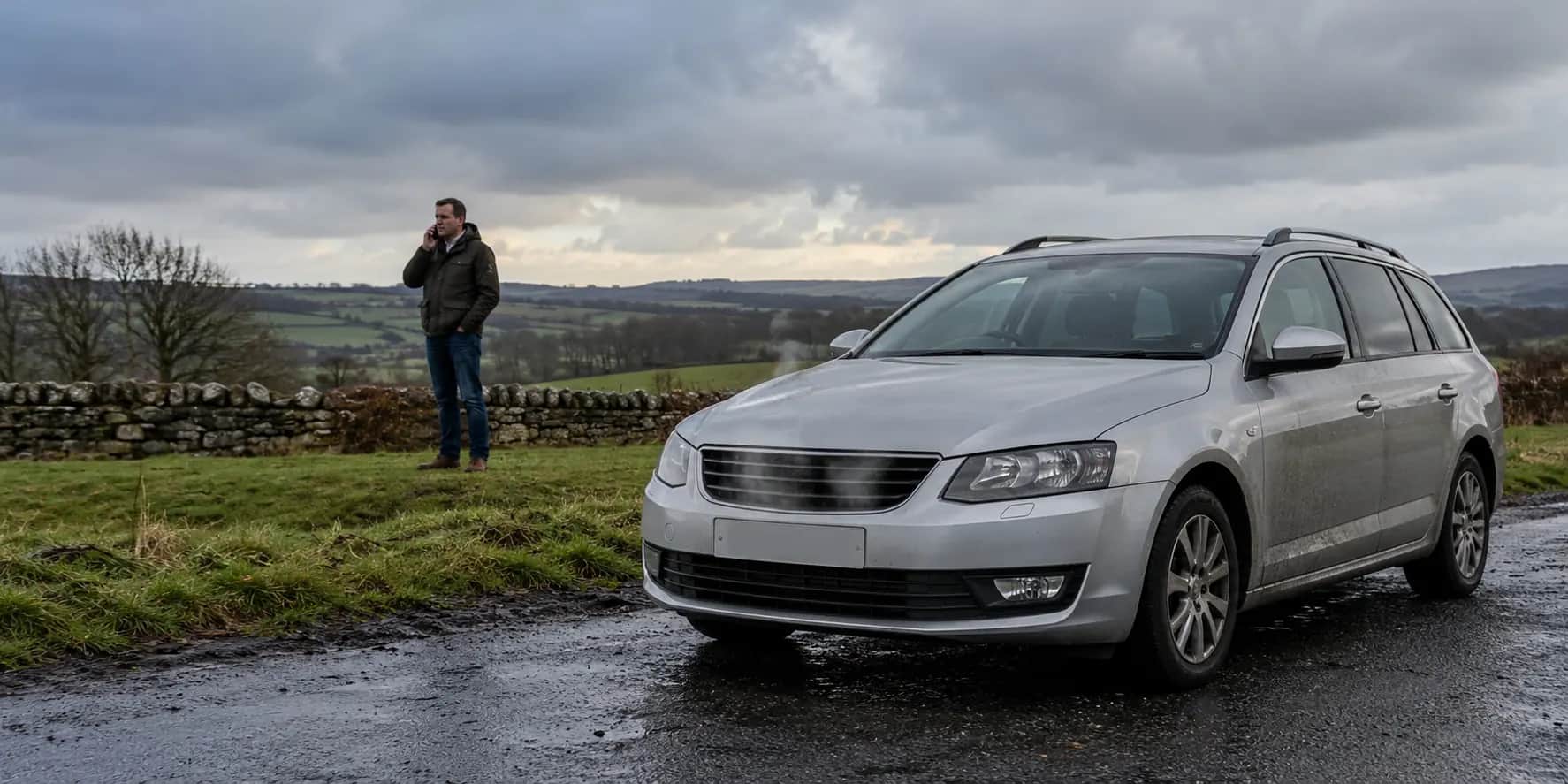
Your temperature gauge climbs, steam rises from the bonnet or a red warning light comes on. Car overheating while driving is stressful, and every extra minute of heat adds engine damage.
Pull over safely, switch off and call for help. This guide covers the first steps, the common causes, motorway rules and when to call for recovery.
What to do if your car overheats: turn off the air conditioning, turn the heater to full and pull over at the first safe place.
Do not pour cold water into a hot radiator. The sudden temperature change can damage the engine.
Generic advice says switch off at once, but manufacturers differ. Volvo’s V60 support page separates two dashboard messages.
On “Stop safely”, Volvo says to let the engine idle for several minutes. On “Turn off engine”, switch it off.
Read the cooling section of your manual now. It names the exact messages your car shows.
A red or amber engine temperature warning light, a gauge climbing into the red or steam from the bonnet means the engine is too hot.
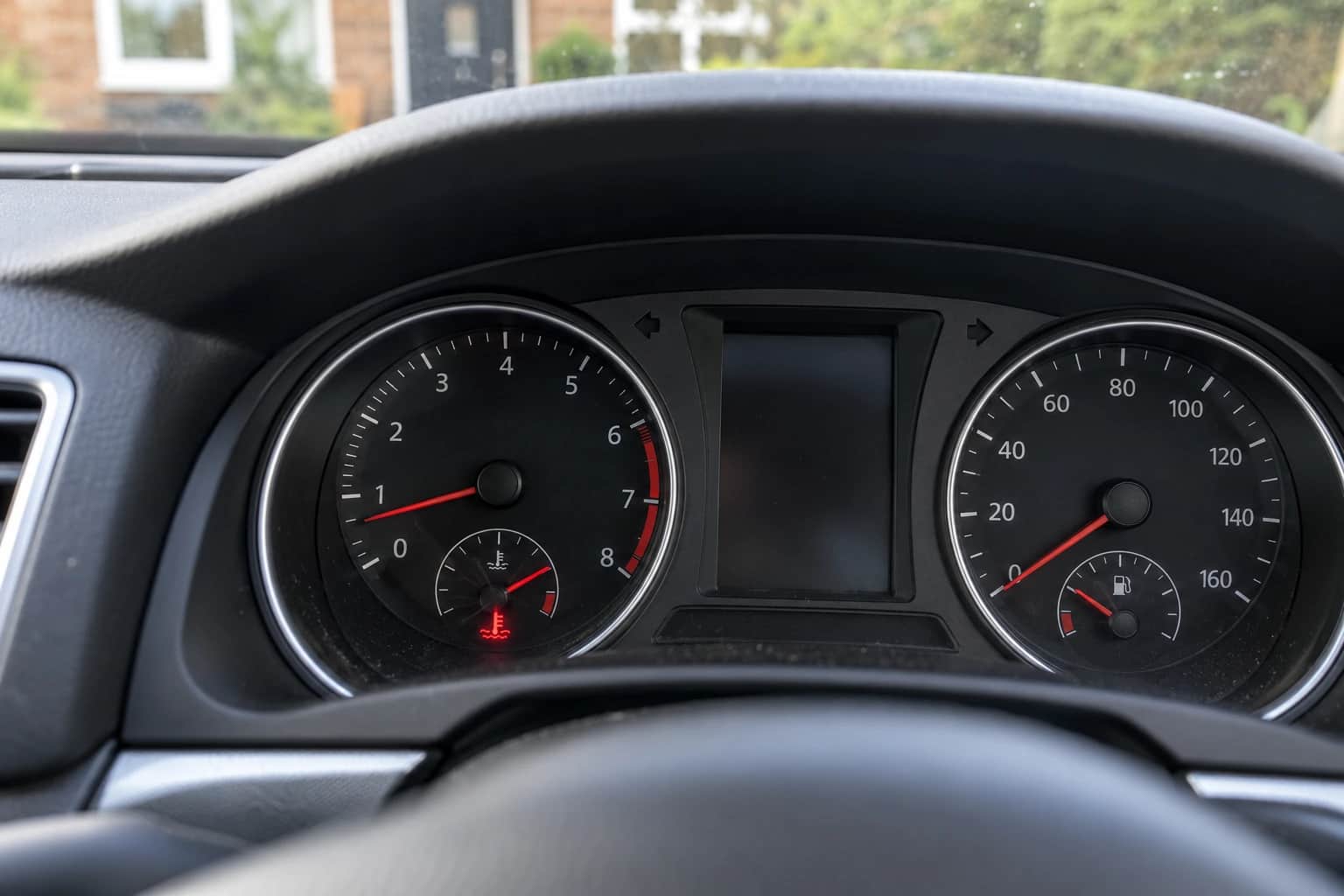
Not every car has a gauge. In a July 2026 AA survey of 12,438 AA members, run by Yonder, 63% wanted both a gauge and a warning light. 15% wanted a warning light only and 14% a gauge only.
If your car has only a warning light, treat steam or a sweet smell as the same alert. Do not wait for the light.
Most overheating comes from a cooling system fault: low coolant, a stuck thermostat, a failing pump or fan, or a radiator problem.
| Cause | What you notice | Roadside fix or recovery? |
|---|---|---|
| Low coolant or a leak | Puddle under the car, sweet smell, low coolant reservoir | Top up with the correct coolant only if the engine is cold and nothing is leaking. Otherwise, recovery. |
| Stuck thermostat | Gauge climbs quickly soon after starting | Recovery |
| Radiator fault | Steam, a leak at the front of the car, poor cooling | Recovery |
| Failing water pump | Coolant leak at the front of the engine, a whining noise | Recovery |
| Cooling fan fault | Overheats in traffic or at idle, cools down at speed | Recovery |
| Low engine oil | Oil warning light, engine noise, burning smell | Do not drive. Check the oil level when cold, then recovery. |
| Blocked or air-locked cooling system | Temperature swings, heater blows cold | Recovery |
You can't confirm most of these at the roadside. A garage finds the exact fault, so your job is to stop safely and limit the damage.
No. Stop as soon as it is safe and let the engine cool.
Motrio's UK guide says a few minutes of overheating can warp the cylinder head or blow the gasket. Both are serious engine faults.
After the engine cools, don't treat the problem as solved. The cause is still there, so get the car checked before your next journey.
One UK owner-forum thread suggests a quick check after an overheat. With the engine cold, open the oil filler cap and look underneath for a creamy residue. If you see it, tell the garage.
On a motorway, a red or amber warning light means leave at the next exit or service area, says National Highways. Never stop in a live lane.
If you can't reach a safe place, stay in the car with your seatbelt and hazard lights on and call 999. Keep animals in the vehicle or, in an emergency, under control on the verge.
This happens to real drivers. Cheshire Fire and Rescue attended an overheated engine bay on the M56 eastbound hard shoulder, between junctions 10 and 9, on 25 May 2026.
Crews cooled it with a hose reel jet and checked it with thermal imaging. Two lanes closed.
On an A-road, pull into a layby, gateway or side road. Avoid stopping on a bend or the brow of a hill.
Slow traffic, hot weather and long climbs all make the cooling system work harder.
In stop-start traffic, less air passes through the radiator, so the cooling fan does the work. A weak fan or low coolant shows up first.
On a hill, the engine works harder and makes more heat. The AA attended 21% more overheating-related callouts in the week before its 5 August 2026 survey release than in the same week of 2025.
Yes. Hybrids and electric cars cool a drive system as well as an engine, and the steps differ.
Volkswagen UK’s page for its “Electric drive overheated” warning says to park in the open air and deactivate the drive system. It also says not to add coolant and to call roadside assistance.
Other brands word this differently. Read your own manual and tell the operator your car is a hybrid or electric.
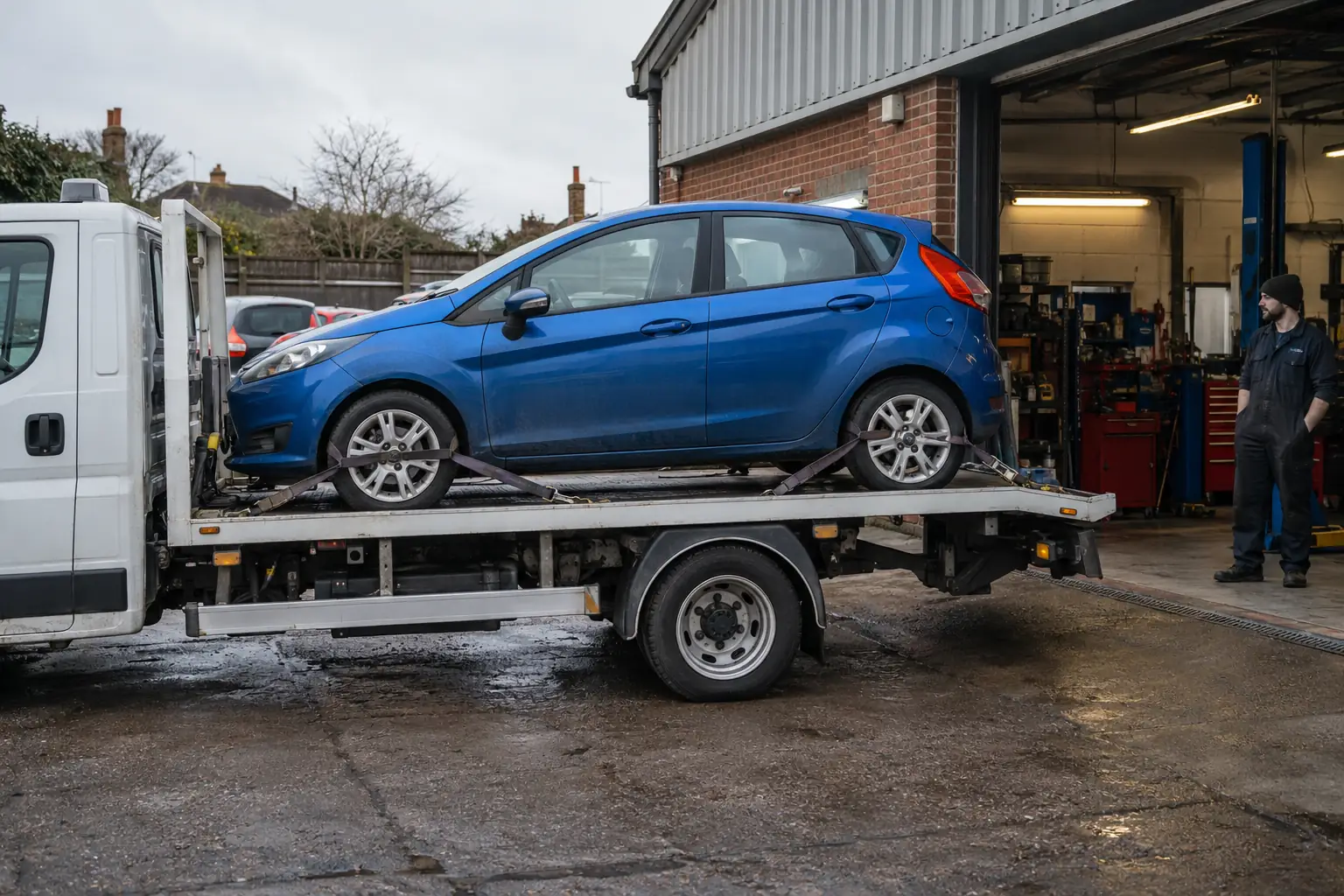
Call for recovery if the warning returns after the engine cools, coolant is leaking or you are on a fast road.
| Situation | What to do |
|---|---|
| Coolant slightly low, engine cold, no leak | Top up with the correct coolant, then book a garage check |
| Warning returns after a top-up | Stop driving and call recovery |
| Coolant on the ground or steam from the bonnet | Call recovery |
| Overheating in traffic or at idle | Call recovery so the fan, pump and thermostat get checked |
| Motorway or hard shoulder | Call National Highways, then your breakdown provider |
| Hybrid or electric warning | Park in the open air and call recovery |
FSR Recovery Group’s vehicle breakdown recovery covers cars, light vans, 4x4s and SUVs, 24/7. We work around Darlington, on the A1(M) and the A66, and across the areas we cover.
For a flat battery or a flat tyre, our roadside assistance can help on the spot. An overheating engine needs recovery, and vehicle transporting covers moving the car on afterwards.
Give the operator these details so the right truck arrives:
A lowered car needs the right truck, so say so when you call.
You can still call a recovery firm directly. Alphabet Fleet and Ageas both say you can ask for emergency help without cover.
Ageas adds that most online policies take 24 hours to activate, so buying cover after you break down does not help.
Ask for a quote before the truck loads. At FSR, we discuss a quote before any work begins.
Check your coolant level regularly, and always with the engine cold.
A car that won’t start is a different fault. Our guide to a car that won’t start when the battery is fine covers it, and you can browse every service we offer.
Wait about 30 minutes. Never open the radiator or coolant cap while the engine is hot, because pressurised coolant can spray out and scald you. Check the level only when the engine is cold, and add the coolant your manual specifies.
Recovery is the safest choice. The cause of the overheating is still there, and a second overheat can finish the damage the first one started. If you must move the car, drive only to the nearest safe place and stop if the warning returns.
No, use the coolant your manual specifies. Plain water dilutes the coolant mix that protects the engine, and cold water poured into a hot radiator can damage it. Wait until the engine is cold, then have the system checked.
A faulty cooling fan is a common cause, because little air passes through the radiator at idle. Low coolant and a weak water pump show up first in traffic too. If the gauge drops once you move, ask a garage to check the fan.
Yes, stop at the first safe place. National Highways says a red or amber warning light on a motorway means leave at the next exit or service area. Manufacturers word these messages differently, so check your manual for what your car shows.
Yes, you can call a recovery firm directly and ask for emergency help, say Alphabet Fleet and Ageas. Ageas adds that most online policies take 24 hours to activate. At FSR, we discuss a quote before work begins.
Call or WhatsApp FSR Recovery Group on +44 7888 502989, or use our contact page. We are at 135 Gladstone St, Darlington DL3 6LB and recover cars, light vans, 4x4s and SUVs 24/7.
FSR Recovery Group provides 24/7 vehicle recovery and roadside assistance across Darlington, County Durham and North Yorkshire. Call or message us with your location and we’ll confirm the right help for your situation.
Car won't start but the battery seems fine? Here are 8 possible causes, what the clicking sounds mean, safe checks to make, and when to call for help.
Read Article