
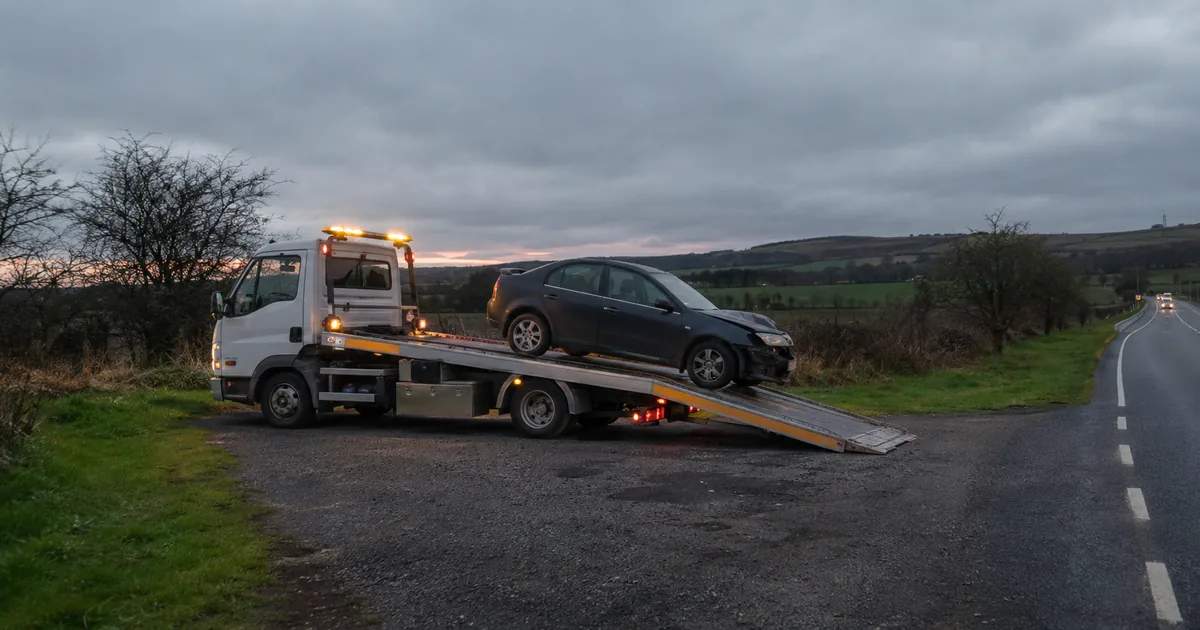
After a Collision in County Durham or Darlington: What to Do at the Scene and How Accident Recovery Works
After a car accident, stop safely, check for injuries and call 999 if anyone is in danger or needs urgent help. Exchange details, record what happened when safe, tell your insurer and arrange recovery if the car cannot safely continue.
That order matters whether you are on the A167, a Darlington street or a rural County Durham lane. A damaged car and passing traffic can make a stressful moment worse. Work through one step at a time; photographs and recovery bookings come after people’s safety.
Short answer: the first things to do after a collision
Start with the immediate danger, then deal with information and the vehicle:
- 1. Stop as soon as it is safe. Use hazards, switch off the engine once stopped and assess your surroundings.
- 2. Check people first. Call 999 for serious injury, danger or a dangerous road obstruction.
- 3. Exchange details. Record names, addresses, vehicle registrations and insurance information as appropriate.
- 4. Keep a factual record. Take photographs and witness details only from somewhere safe.
- 5. Contact your insurer. Check whether it will arrange recovery and where the car should go.
- 6. Arrange suitable recovery. Explain the location, damage and agreed destination before collection.
You do not need to settle responsibility at the roadside before following these steps. This is practical guidance, not legal advice; follow police and emergency-service instructions for your circumstances.
Step 1: Make the scene safe (A-roads, A1(M) and rural lanes)
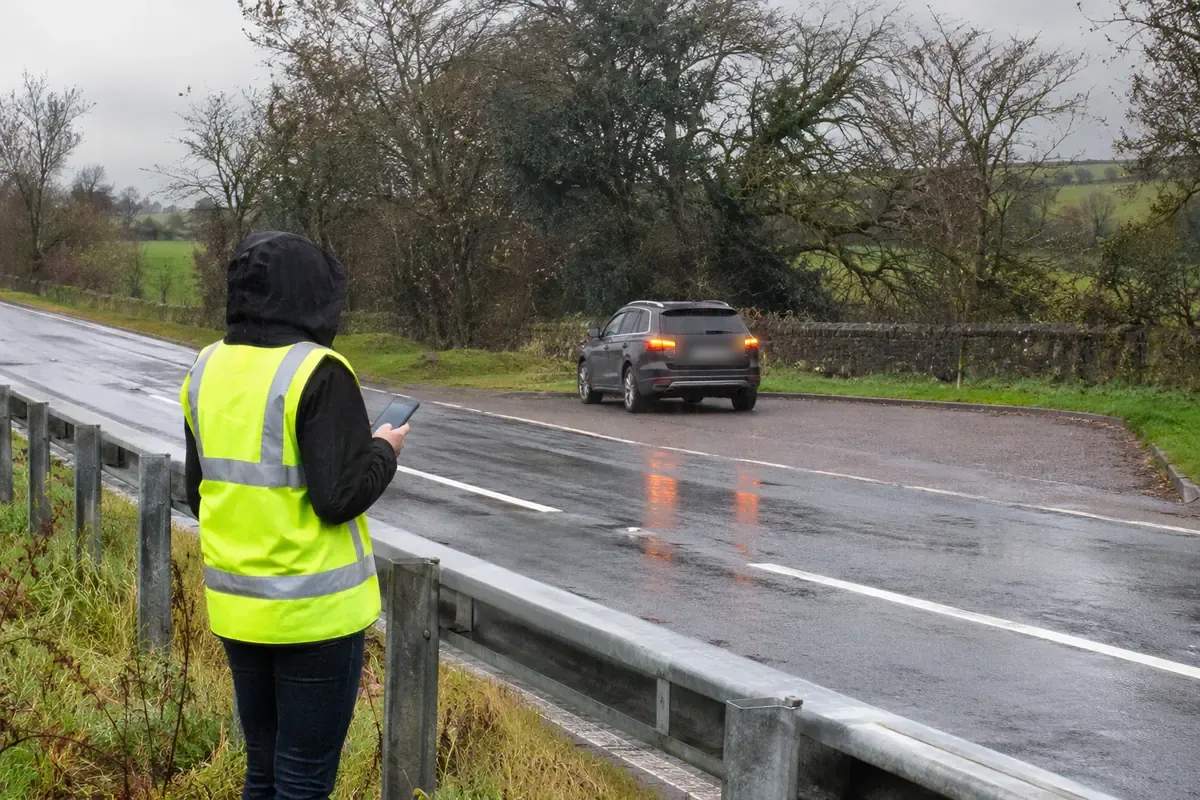
Make your stopping place and the people around you the first priority. Do not stand between a damaged vehicle and approaching traffic, and do not attempt repairs beside a live carriageway.
On the A66, A167 or A68, explain whether the car obstructs a lane, junction or bend. On a rural road, give a nearby village, farm entrance or postcode if known. A location that looks quiet can still expose people to approaching vehicles.
On the A1(M), follow motorway precautions. If you can leave safely, use the side furthest from traffic and get well clear, behind a barrier where available. Do not put out a warning triangle on the motorway or carriageway.
If you cannot get clear safely, remain belted in with hazards on and call 999 for the police. Our A1(M) breakdown safety guide explains motorway stopping and location details. Follow the National Highways motorway guidance and any instructions from responders.
Step 2: Check for injuries and when to call 999
Call 999 when somebody is in danger, seriously injured, or the collision creates a dangerous obstruction. Durham Constabulary also advises an emergency call if you believe a serious offence has been committed.
Give the road, direction and best available location first, followed by what happened and the number of people affected. State whether vehicles remain in live lanes. Use a junction number, visible marker reference or safely shared map location rather than guessing.
Highway Code Rule 283 says not to move injured people unless they face immediate danger. Do not remove a motorcyclist’s helmet unless essential and you are trained. Follow the call handler’s directions, including first-aid instructions.
Keep uninjured people away from traffic where possible. Do not smoke near the scene. If there is smoke, fire or a suspected fuel leak, tell the emergency operator and keep clear instead of investigating.
Step 3: Stop, exchange details and when to call 101
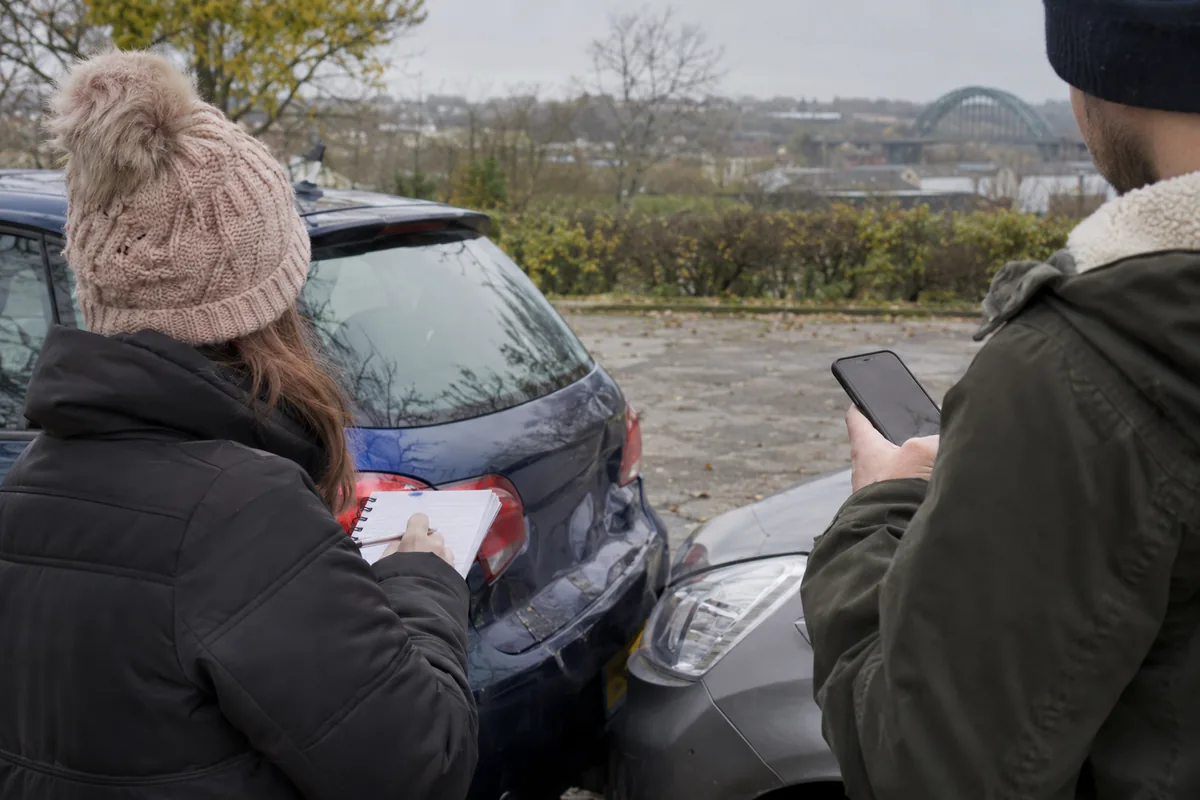
Stopping is a legal duty after a reportable collision. Durham Constabulary’s collision guidance explains the local requirements and what to do at the scene.
Exchange your name, address and vehicle registration with those involved. Give the vehicle owner’s name and address if the vehicle is not yours. Durham Constabulary says to provide insurance details if requested.
Record the information carefully rather than relying on a remembered registration or an incomplete phone contact. If safe, check that a written note or photograph is readable before leaving.
If someone will not provide details, or has left without giving them, call 101 while still at the scene. Use 999 instead where there is immediate danger or another emergency. Do not follow a departing vehicle or turn a disagreement into a confrontation.
Do you need to report the collision to the police?
Reporting depends on what happened, not simply how small the dent looks. Durham Constabulary says to report a collision if anyone was injured, details could not be exchanged, or you suspect a driving offence.
Its guidance says a police report is not needed where details have been exchanged, nobody was injured and there are no allegations of driving offences. If unsure how the guidance applies, ask the police rather than assuming another driver has reported it.
Where details were not given, GOV.UK’s accident guidance says to report within 24 hours. The Highway Code says as soon as reasonably practicable, within that limit. Do not treat the limit as a reason to delay.
Use Durham Constabulary’s online reporting route for a non-emergency report where appropriate. Keep the submission and reference for your insurer. A recovery booking does not replace a police report or the duty to exchange details.
Step 4: Record evidence (photos, notes, witnesses, dashcam)
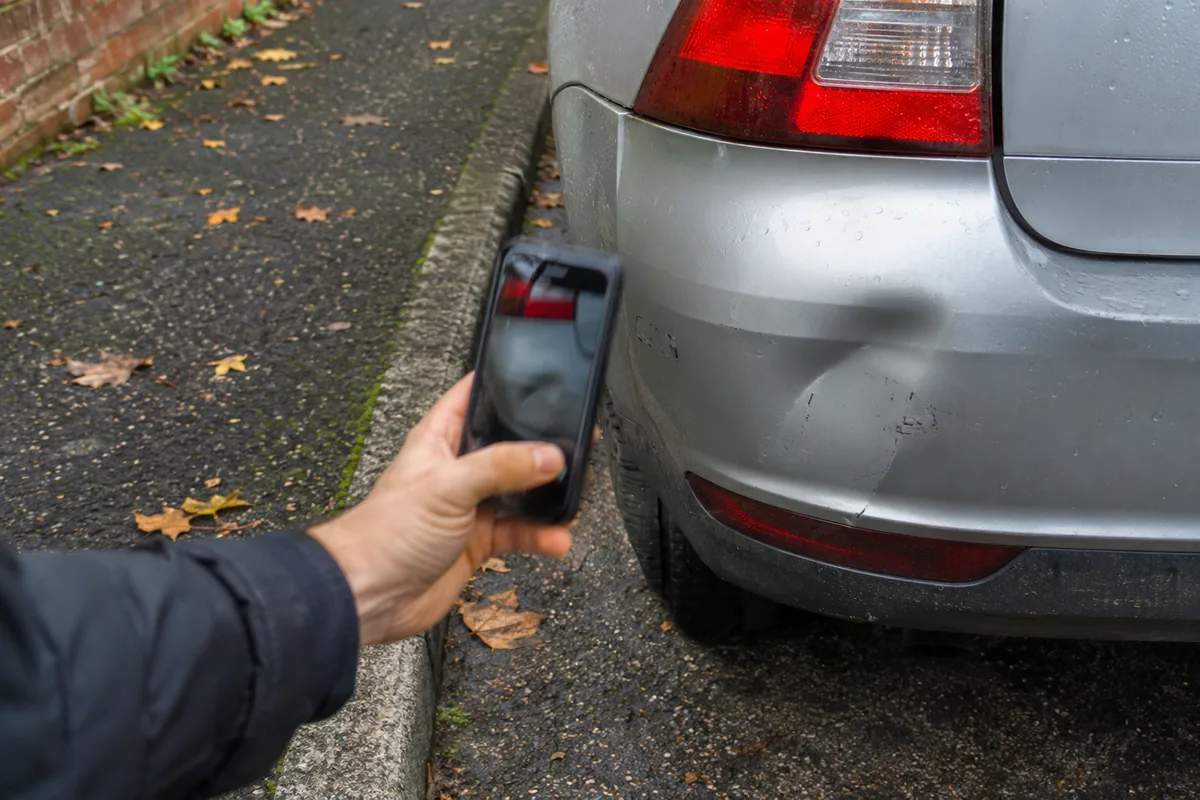
Collect information only after the immediate safety and injury checks. No photograph is worth stepping into traffic, crossing a carriageway or standing beside an unstable vehicle.
From somewhere safe, record:
- The road, date, time and direction of travel.
- Vehicle registrations, makes and models.
- Visible damage to vehicles and nearby property.
- The wider scene, signs and road markings where safely visible.
- Weather, light and road conditions you observed.
- Witness contact details, if they agree to provide them.
Make a short factual note while events are fresh. Separate what you saw from what another person told you. Avoid guessing speeds, causes or injuries, and do not alter the scene simply to make a clearer photograph.
If you have dashcam footage, preserve the relevant recording when safe. Note any nearby cameras for the police or insurer, without assuming footage exists or that you can obtain it. Keep records together so you can explain the incident consistently.
Step 5: Tell your insurer
Notify your insurer even if you do not plan to claim. GOV.UK’s insurance guidance makes this distinction clear: deciding against a claim does not remove the need to report the accident to your insurance company.
Have your policy details, registrations, photographs and any police reference ready. Describe events accurately and follow the insurer’s process. Ask what it needs next rather than promising another driver a particular outcome.
Before arranging your own recovery, ask whether the insurer will organise it and whether it specifies a destination. Check your policy rather than assuming recovery or a particular provider is included. Tell the recovery operator about any arrangements already made.
Is the car safe to drive? Signs it needs recovery
A car can start and still be unsafe to drive after a collision. A current MOT does not establish its condition after fresh damage; GOV.UK’s roadworthiness guidance explains that drivers remain responsible for vehicle safety.
Do not drive away if you notice:
- Damage to a tyre or wheel, or bodywork pressing against it.
- Steering or braking that feels different.
- Fluid leaking or smoke from the vehicle.
- Loose bodywork or parts that could detach.
- Damage affecting your view, lights or mirrors.
- Warning messages or other signs the car may not operate safely.
These are reasons to stop and seek assessment, not a complete roadside inspection checklist. Do not crawl underneath, reach around damaged parts or attempt a test drive into traffic to find out whether the car is all right.
If you are unsure, explain the damage and arrange professional advice. Recovery is often the practical way to get a vehicle to a suitable place for inspection without relying on it being safe to drive.
How accident recovery works with FSR Recovery Group
Once immediate danger has been dealt with, FSR Recovery Group’s accident recovery service can help with suitable cars and light vans that cannot safely continue. Assistance is available 24/7, subject to the vehicle, location and circumstances.
Start the call with these details:
- 1. Location: road, direction, junction or marker reference, postcode or a safely shared location. Say whether the car remains in a live lane or has left the road.
- 2. Vehicle: make, model and whether it is a car or light van. Mention if it is automatic, hybrid or electric.
- 3. Condition: visible damage, whether it starts, whether wheels turn and whether steering and neutral selection work. Report only what you already know; do not test these beside traffic.
- 4. People and access: passenger needs, police involvement, restricted access or an awkward stopping position.
- 5. Destination: a garage, bodyshop, home or another suitable agreed address, including any instructions from your insurer.
For accident recovery around Durham or Bishop Auckland, a town name alone may not identify the collection point. Explain where the vehicle actually stopped and whether you are still beside it.
The operator can then discuss suitable recovery arrangements. Do not assume that a damaged car which will not roll can be collected in the same way as a freely moving vehicle. Clear information helps the operator plan the loading.
Agree the destination before the vehicle moves. If a separate onward move is needed later, see vehicle transporting. Recovery arrangements and the insurer’s decisions about repairs or a claim are separate matters.
What not to do after a collision
Avoid decisions made simply to get the incident over with:
- Do not drive a vehicle that may be unsafe.
- Do not leave without meeting your duties to stop, exchange details and report where required.
- Do not enter traffic to collect debris or take photographs.
- Do not attempt motorway repairs or put out a warning triangle there.
- Do not argue about blame or make guesses about responsibility. Give factual information to police and insurers.
- Do not arrange duplicate recovery without checking what your insurer or another operator has already organised.
The same practical steps apply whether you believe the collision was your fault or somebody else’s. Concentrate on safety, accurate information and the required reports; responsibility is not something this guide can decide.
Frequently asked questions
Do I have to report a car accident to the police in County Durham?
Report it if anyone was injured, details could not be exchanged, or you suspect a driving offence, following Durham Constabulary’s guidance. If details were exchanged, nobody was injured and no driving offence is alleged, its guidance says a police report is not needed.
What details must I exchange after a collision?
Give your name, address and vehicle registration, plus the owner’s name and address if different. Durham Constabulary also says to provide insurance details if requested. Record the other parties’ details accurately and tell police if you cannot obtain them.
Should I call 999 or 101 after a crash?
Call 999 for danger, serious injury, a dangerous obstruction or a suspected serious offence. Use 101 for non-emergency police help, including difficulty obtaining another driver’s details. Do not wait for a recovery booking when emergency assistance is needed.
Can I drive my car after a minor accident?
Only if it is safe and roadworthy. Small-looking damage does not prove that steering, brakes, tyres or other parts are unaffected. If anything seems wrong, or you cannot judge the condition safely, arrange assessment or recovery instead of driving away.
Where will my car be taken after accident recovery?
The destination should be agreed before collection: a suitable garage, bodyshop, home or another agreed location. If your insurer is directing the recovery, confirm its instructions first. Tell the operator if you have not yet decided where the vehicle should go.
Should I call my insurer before booking recovery?
Once emergency needs are addressed, check with your insurer before independently booking where possible. It may arrange recovery or specify the destination. Explain if the vehicle is in danger and follow police instructions; do not delay an emergency call while checking a policy.
Need accident recovery in Darlington or County Durham?
Once you are safe, call FSR Recovery Group on +44 7888 502989, or WhatsApp the same number. Give your location, vehicle details, visible damage and intended destination, and mention any police or insurer instructions.
See our accident recovery and emergency assistance page, or use the contact page for other enquiries. If anyone is injured or in immediate danger, contact the emergency services first.
Need Recovery or Roadside Help?
FSR Recovery Group provides 24/7 vehicle recovery and roadside assistance across Darlington, County Durham and North Yorkshire. Call or message us with your location and we’ll confirm the right help for your situation.