Last updated: 23 November 2026.
An A1(M) breakdown can leave you deciding what to do while traffic keeps passing. A warning light, a damaged tyre or sudden loss of power needs a different response here from the one you would make on your drive.
This guide puts those decisions in order for drivers around Durham, Darlington and Scotch Corner. Start with your position on the road, then the people in your vehicle, then the calls for help. Leave the diagnosis until you are somewhere safer.
Your first decision is whether you can reach a stopping place away from moving traffic. Do not make checking the engine your first task.
- 1. Still able to drive safely? Leave at the next exit or enter a service area if possible. Do not continue solely to reach your preferred garage.
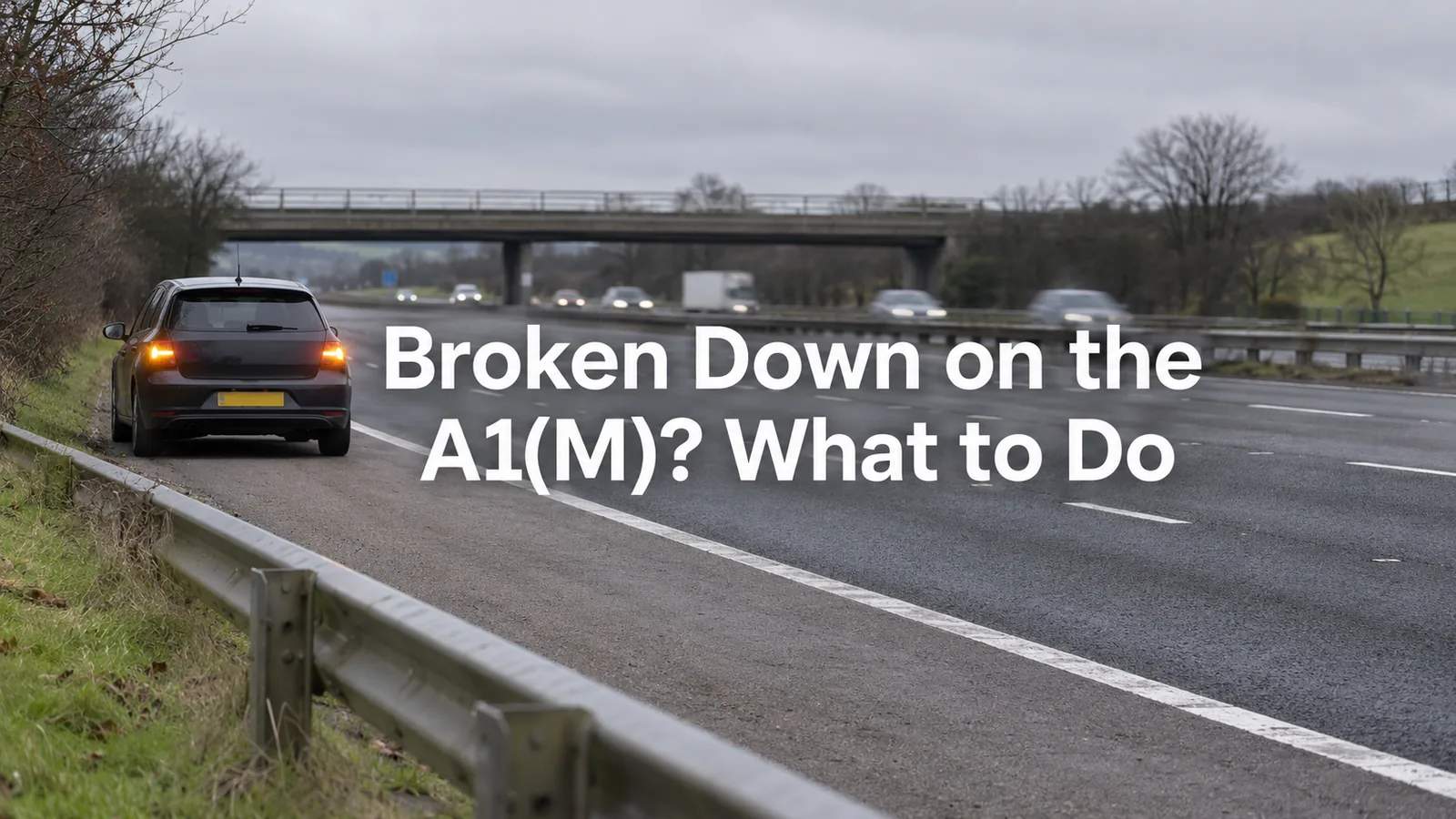
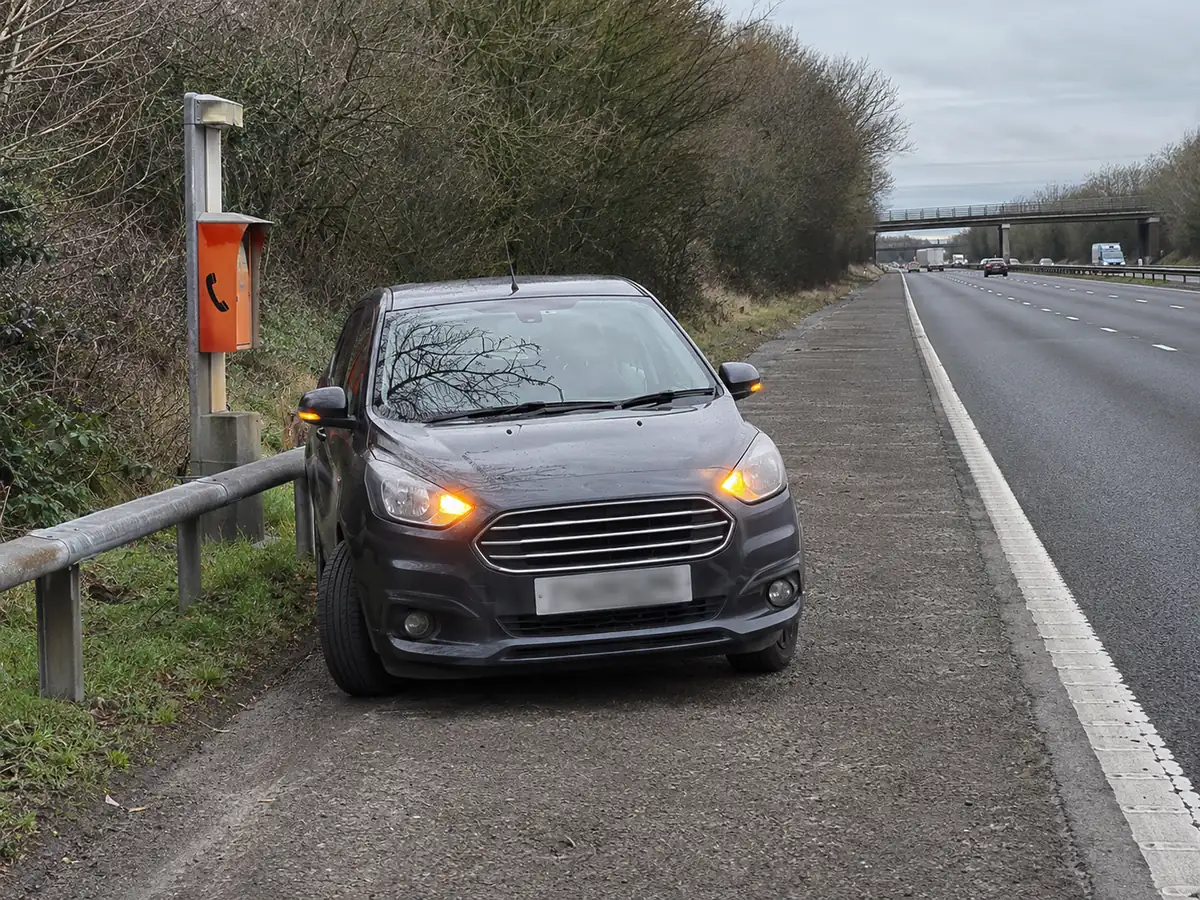
- 2. Unable to leave the motorway? Move left and use a hard shoulder or emergency area where you can. Stop as far left as possible, leaving space to leave the vehicle, and turn your wheels left.
- 3. Once stopped: use hazard warning lights, with sidelights if visibility is poor or it is dark.
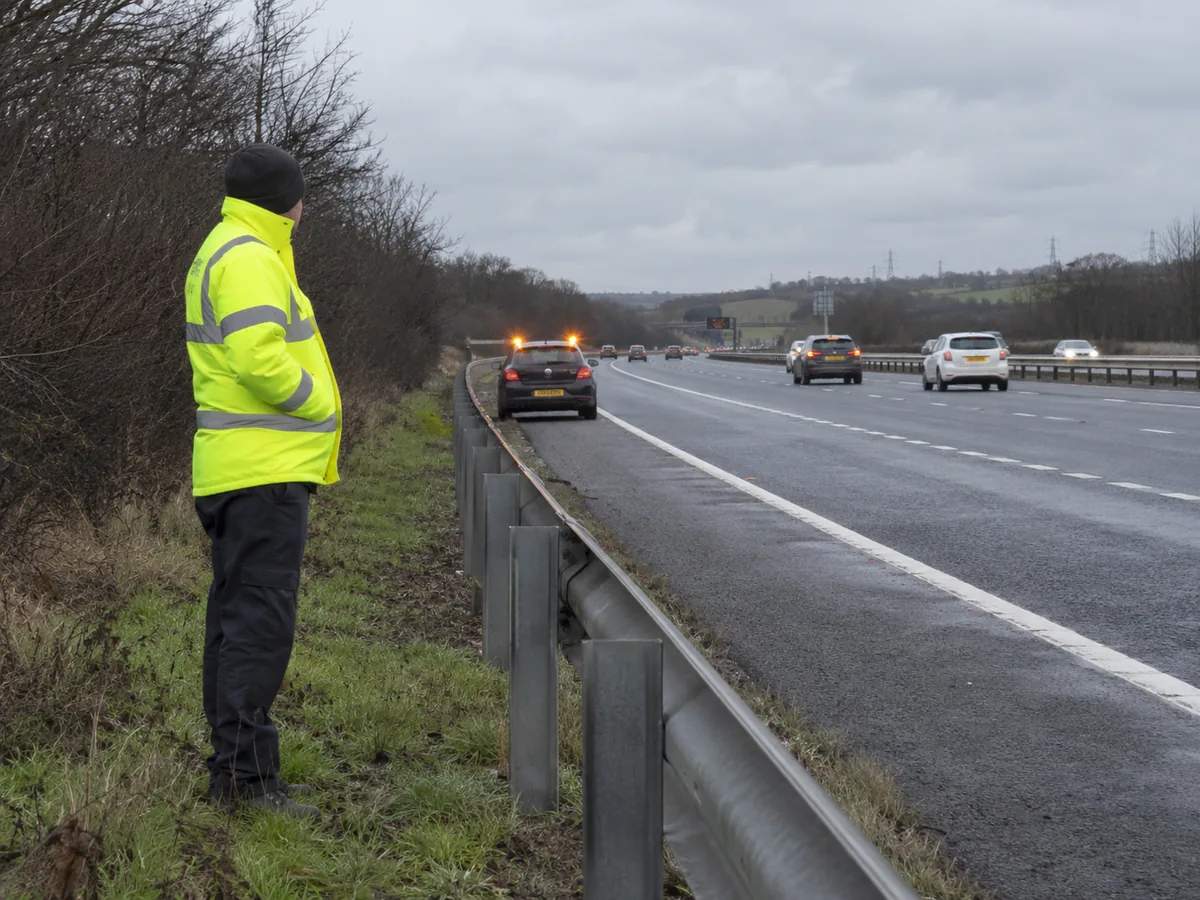
- 4. Safe to leave? Use the side away from traffic and move well clear, behind a barrier where available. Keep passengers together and away from the road.
- 5. Unable to get clear safely? Remain belted in, keep the hazards on and call 999 for the police. Otherwise, contact National Highways and a recovery operator from your safer waiting position.
Read the fuller steps below only when you can use your phone safely. A passenger can help with the call, but nobody should step towards traffic to read a sign or investigate the fault.
The motorway designation matters more than how familiar the route feels. The wider A1 route includes motorway and non-motorway sections; do not assume that advice for an ordinary road applies wherever you see “A1”.
When speaking to an operator, use the road designation shown on signs or your map, together with your direction. Say if you are on a slip road, in a service area or on the main carriageway. Those details describe different access problems.
On A1(M) sections, use motorway breakdown guidance. Do not put out a warning triangle on a motorway or carriageway. Do not walk along the road looking for a garage or filling station. Calling from a safer position is the next step.
If you have already left onto another road, explain that change. “Off the A1(M), stopped on the approach to the roundabout” gives a different starting point from “on the motorway”. Do not try to return to the motorway to make the collection easier.
Our A1(M) recovery area page describes FSR Recovery Group’s regional coverage. This guide explains the safety decisions before a recovery can take place.
Official safety steps: stop, get clear and report the breakdown
The stopping and waiting sequence below follows National Highways’ motorway breakdown guidance and The Highway Code, rules 275–279. Follow police or traffic officer instructions at the scene.
- 1. Choose the best available stopping place. If the vehicle can safely reach an exit or service area, leave the carriageway. A hard shoulder remains close to traffic, so reaching it does not end the risk.
- 2. Make your stopped vehicle visible. Switch on hazards and use sidelights in darkness or poor visibility. Do not stand where you hide the lights from approaching drivers.
- 3. Leave only when it is safe. Get out on the side furthest from traffic. Help passengers follow that route rather than opening doors towards passing vehicles.
- 4. Move away from the vehicle. Use a barrier where there is one, checking for uneven ground, drops or debris before stepping behind it. Keep out of the path your vehicle could take if another vehicle struck it.
- 5. Leave repairs for a safer location. Do not change a wheel, connect jump leads or inspect the underside on the hard shoulder. Do not put out a warning triangle. A small fault does not make the roadside a safe workshop.
- 6. Report your situation. Use an emergency telephone where provided and safely accessible, or call National Highways on 0300 123 5000. Contact your recovery operator too. Face approaching traffic while using the phone.
Keep children under control and away from the carriageway. Animals should stay in the vehicle unless an emergency means they must be kept under control on the verge.
Do not return to sit in the vehicle because the weather is unpleasant. If you cannot leave safely in the first place, use the emergency procedure below instead of attempting these steps at any cost.
How to describe your location around Durham, Darlington and Scotch Corner
Give the operator a road, a direction and a landmark before explaining the mechanical problem. “A1(M) southbound, beyond the last junction I passed” starts a useful conversation; a town name alone can still leave uncertainty about the carriageway.
Use junctions you actually remember. Useful junction references on this stretch include Junctions 62, 61, 60 and 59. They help describe where you stopped; they do not mean an operator can enter the motorway beside your vehicle.
For journeys around Durham, say whether the last sign you recognised showed Junction 62 or Junction 61. Further along the corridor, report Junction 60 or Junction 59 if those are the numbers you saw. Never choose one simply because it sounds nearby.
Scotch Corner is the A66 connection at A1(M) Junction 53. If you have turned towards the A66, say whether you have left the A1(M), rather than describing the whole journey as a motorway breakdown.
Add these details when you can obtain them without approaching traffic:
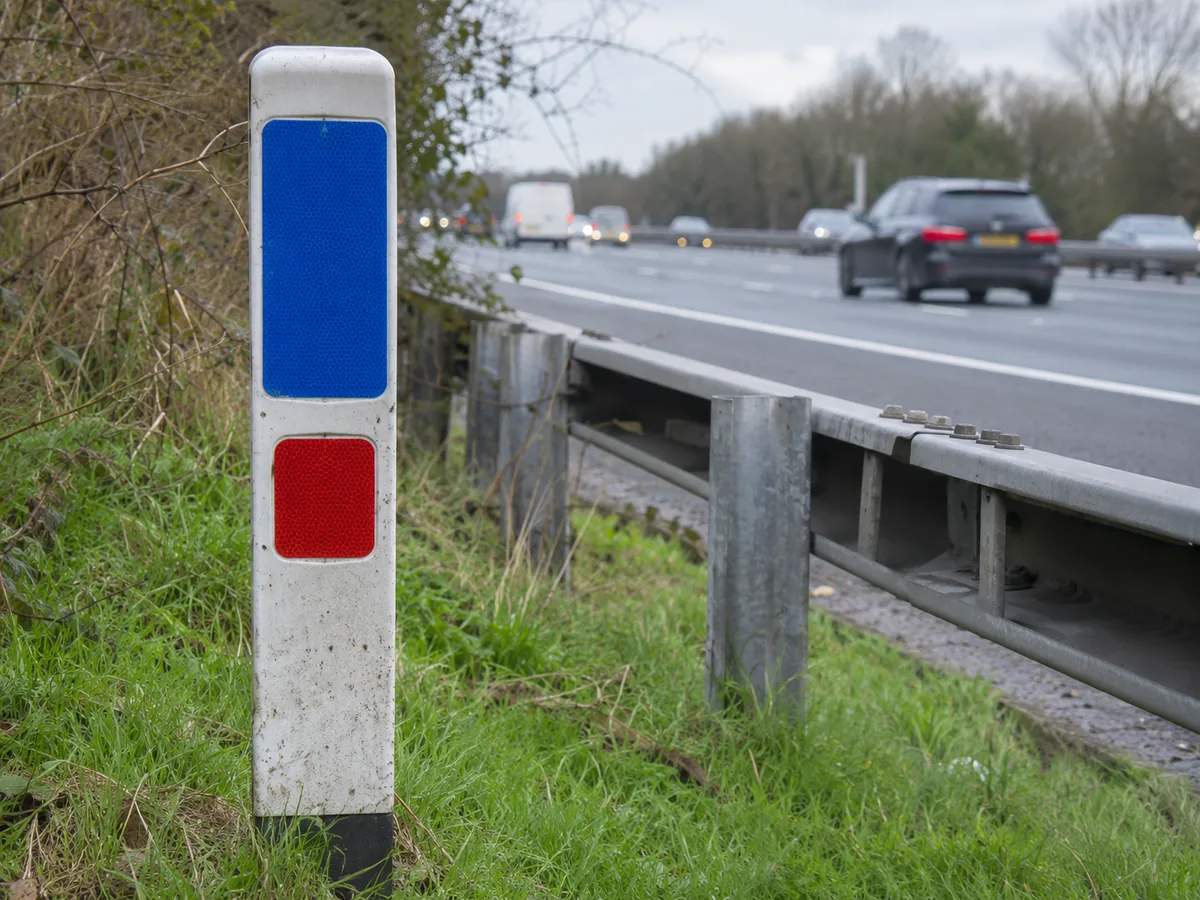
- The letters and numbers on a visible driver location sign or marker post.
- Whether you are northbound or southbound, and before or after the junction you remember.
- Your stopping place: hard shoulder, emergency area, slip road, service area or live lane.
- A map location you can share from where you are safely waiting.
- Any uncertainty: say “I think” rather than presenting a guess as confirmed.
A journey towards Bishop Auckland or Northallerton can help explain your route, but give your present position first. Your intended destination is not necessarily near the place you stopped.
A vehicle stopped in a live lane is an emergency. If you cannot reach a safer position and get well clear safely, stay in the vehicle, keep everyone’s seat belts fastened and leave the hazard lights on. Call 999 immediately and ask for the police.
Use the vehicle’s SOS button if available and ask for the police. Explain that you are stopped in a live lane, then give your road, direction and best available location. Do not postpone that call while arranging a tow.
Do not push the vehicle, stand behind it to wave traffic around, or cross live lanes. A recovery booking cannot provide the lane protection that the emergency services may need to arrange.
If a disability prevents you or a passenger from getting out and reaching safety, explain this immediately. The Highway Code’s Rule 279 advises staying belted in with hazards on and calling 999 for police assistance in these circumstances.
Tell a recovery operator once the emergency call has been made. Make clear whether police assistance is already arranged and whether your position has changed. Follow the emergency operator’s directions if they differ from a general checklist.
Waiting safely: passengers, weather and changing conditions
Keep watching the road while you wait, even after somebody confirms that help has been arranged. A booking does not remove the risk from passing vehicles, debris or a vehicle moving after an impact.
If you have left the car safely, remain away from it and traffic. Keep children close enough to supervise. Tell the operator about anyone who is disabled, older, travelling alone or otherwise needs extra help; do not assume those needs are obvious over the phone.
Cold, rain and darkness can make the vehicle feel like the easier place to wait. Official motorway advice says not to return for shelter. Explain any difficulty to the operator instead of changing position without telling anyone.
If the situation becomes more dangerous, or somebody becomes injured or unwell, contact the emergency services. Give the new information clearly, including whether you are outside the vehicle or still inside it. Do not leave somebody else to guess what has changed.
Recovery starts with confirming the location, the vehicle and what prevents it continuing. Tell the operator whether it is a car or light van, its make and model, what happened before it stopped, and whether it starts, rolls and steers.
Also describe the people travelling with you and your preferred destination. A garage, home address or another agreed place needs to be discussed before the move. Explain if you do not yet know where the vehicle should go.
Roadside assistance may suit some faults, but a motorway stopping place can limit what is sensible there. Do not attempt a repair yourself while waiting for an operator to decide how to help.
Where the vehicle cannot safely continue, vehicle breakdown recovery can move it to an agreed destination. Describe collision damage, a locked wheel or steering trouble when booking; these affect collection arrangements even when the original fault sounds straightforward.
If the vehicle has left the carriageway onto a verge, say so. A winch-out may be considered only after access, ground conditions and the vehicle’s position have been assessed. Do not attempt to drive it back into moving traffic.
For a journey continuing west from Scotch Corner, our A66 winter breakdown guide covers that separate road. Use the guidance for the road you are on now, rather than applying one route’s stopping arrangements to another.
What should I do first if I break down on the A1(M)?
Reach an exit or service area if the vehicle can safely get there. Otherwise move left, stop in an available hard shoulder or emergency area, and use hazards. Leave and get clear only if safe; if trapped in danger, stay belted in and call 999.
Should I put a warning triangle out on the A1(M)?
No. Do not place a warning triangle on a motorway or carriageway. Do not walk back towards traffic to make your car more visible. Use hazard lights, get clear if safe, and tell the emergency or recovery operator where you have stopped.
Who do I call: 999, National Highways or a recovery company?
Call 999 for police assistance when you cannot reach safety or leave safely. For a breakdown where you are safely clear, contact National Highways on 0300 123 5000 and a recovery company. Report injuries or immediate danger to the emergency services.
How can I explain where I am on the A1(M)?
Give your direction, the last confirmed junction and any visible marker reference. Describe where the vehicle is stopped and where you are waiting. A safely shared map pin can help. Tell the operator when a junction or place name is only a guess.
Are the A1 and A1(M) the same around Durham and Darlington?
No. The route name includes motorway and non-motorway sections. Read the designation shown for your current position and report it accurately. Follow motorway advice on A1(M) sections; do not assume that an ordinary-road instruction applies throughout your journey.
What if I stop in a live lane with no way to reach the hard shoulder?
Stay in the vehicle if you cannot get clear safely. Keep seat belts fastened and hazards on, call 999 and ask for the police. Use the SOS button if available. Do not try to push the vehicle or walk across live lanes.
Can FSR Recovery Group help near Durham or Darlington?
Yes. FSR Recovery Group provides 24/7 car and light-van recovery across its A1(M) service area. Call with your exact position and vehicle details so the operator can confirm arrangements. Emergency assistance comes first if you are still in danger.
Once you are safe, call FSR Recovery Group on +44 7888 502989. Have your direction, junction or location reference, vehicle details and proposed destination ready. Say whether anybody needs additional help and whether the emergency services are already involved.
The base is 135 Gladstone Street, Darlington DL3 6LB. For a non-emergency enquiry, use the contact page. When you call from the roadside, begin with your current position so the operator can confirm the next steps for your vehicle.