Last updated: 23 November 2026.
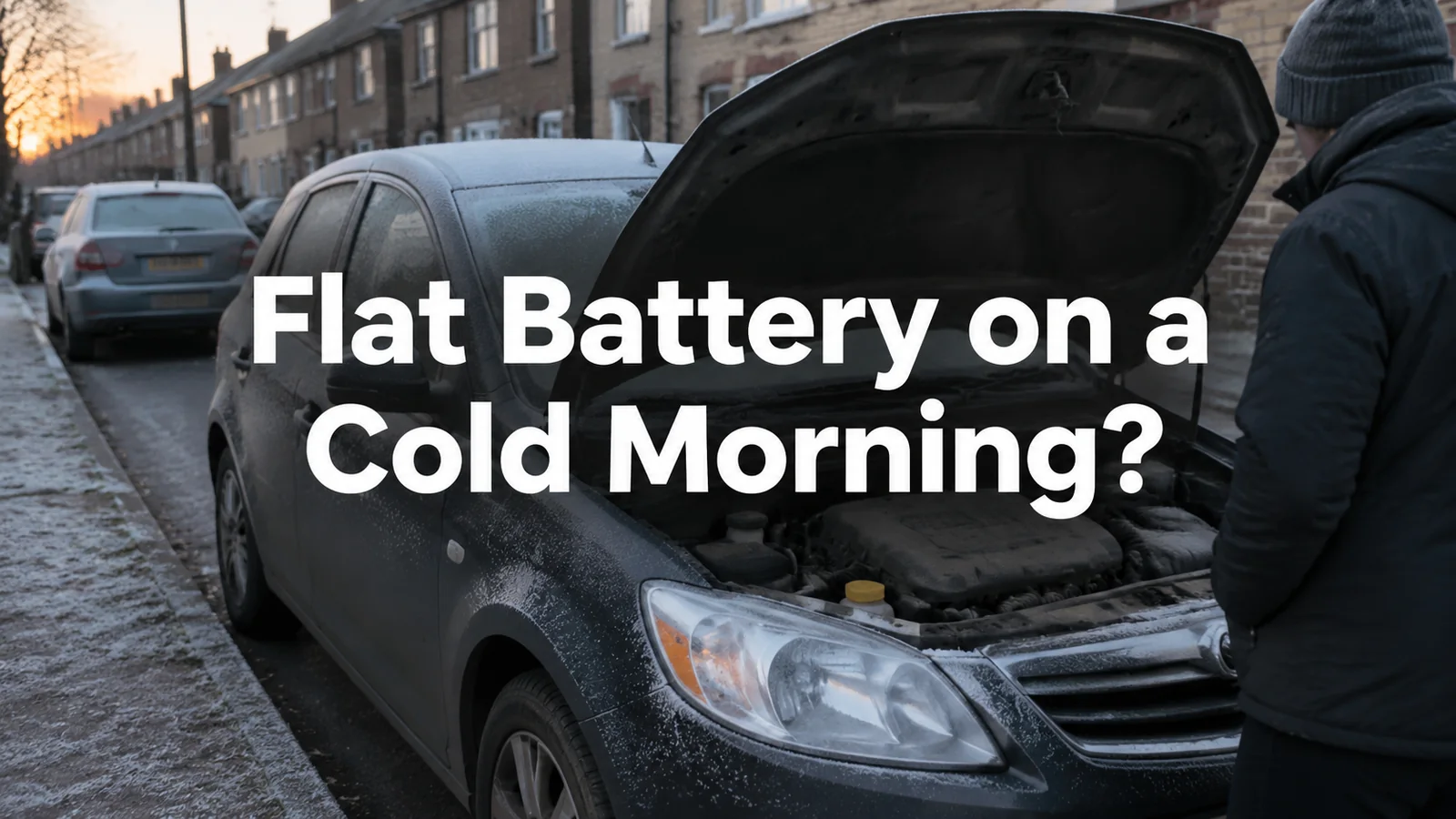
Frost on the windscreen is manageable. A car that barely turns over can stop the whole morning before it begins. Whether you are outside a Darlington home or parked after an overnight shift, do not assume that every winter starting problem needs a new battery.
This guide helps you separate a possible flat battery from other faults. Start with safety, note what the car does, then decide whether a jump start is suitable or whether you need testing and roadside help.
A jump start may restore starting power, but it does not explain why that power disappeared. The useful decision is what the vehicle needs next, rather than simply whether somebody can get it running.
- 1. Check where you are. A driveway and a motorway hard shoulder are different situations. Do not attempt roadside battery work where traffic puts you at risk.
- 2. Describe the starting attempt. Does the engine turn slowly, click, remain silent or turn normally without firing? Those observations help an operator decide what assistance to discuss.
- 3. Reduce unnecessary electrical demand. If you are safely parked, switch off heaters, heated screens, radio and other accessories before another brief attempt. Keep any lights needed for roadside safety on.
- 4. Inspect without disturbing the battery. Leaks, visible damage or suspected freezing mean you should stop and seek help. Do not connect leads simply because another vehicle is available.
- 5. Plan beyond the restart. A repeated flat, unsuccessful jump start or warning light needs assessment. An engine that starts once has not proved that the battery or charging system is healthy.
If you are safely stopped and need assistance, contact FSR Recovery Group on +44 7888 502989. Explain the symptoms before asking for a particular repair.
Cold conditions make starting harder by reducing a battery’s available performance while the engine needs effort to turn over. Winter also brings more use of lights, blowers and heated screens. A battery with little charge in reserve may struggle when these demands meet.
AXA’s cold-weather starting guidance identifies battery trouble as a common reason for winter starting difficulties. It recommends reducing electrical loads at start-up and taking regular drives to help maintain charge.
Cold may expose a weakness. If the battery repeatedly loses charge, a garage may need to check its condition, charging performance and any electrical drain while parked. A replacement alone may leave the underlying problem unresolved.
What happens during a starting attempt is more useful than saying that the car is “dead”. These clues can guide a conversation, but they do not replace a battery or electrical test.
| What you notice | What it could mean | What to tell the operator |
|---|
| Slow, laboured turning | Low available battery power | Whether the turning becomes slower with each attempt |
| Repeated clicking and dimming lights | Insufficient power or a connection problem | Whether the dashboard dims when you try to start |
| No sound and little electrical activity | A very discharged battery or an electrical connection issue | Which lights or accessories still work |
| One click but lights remain bright | A starter or connection fault may be involved | That it is a single click, not repeated clicking |
| Normal turning but no ignition | Something other than a flat battery may prevent starting | That the engine turns at its usual speed |
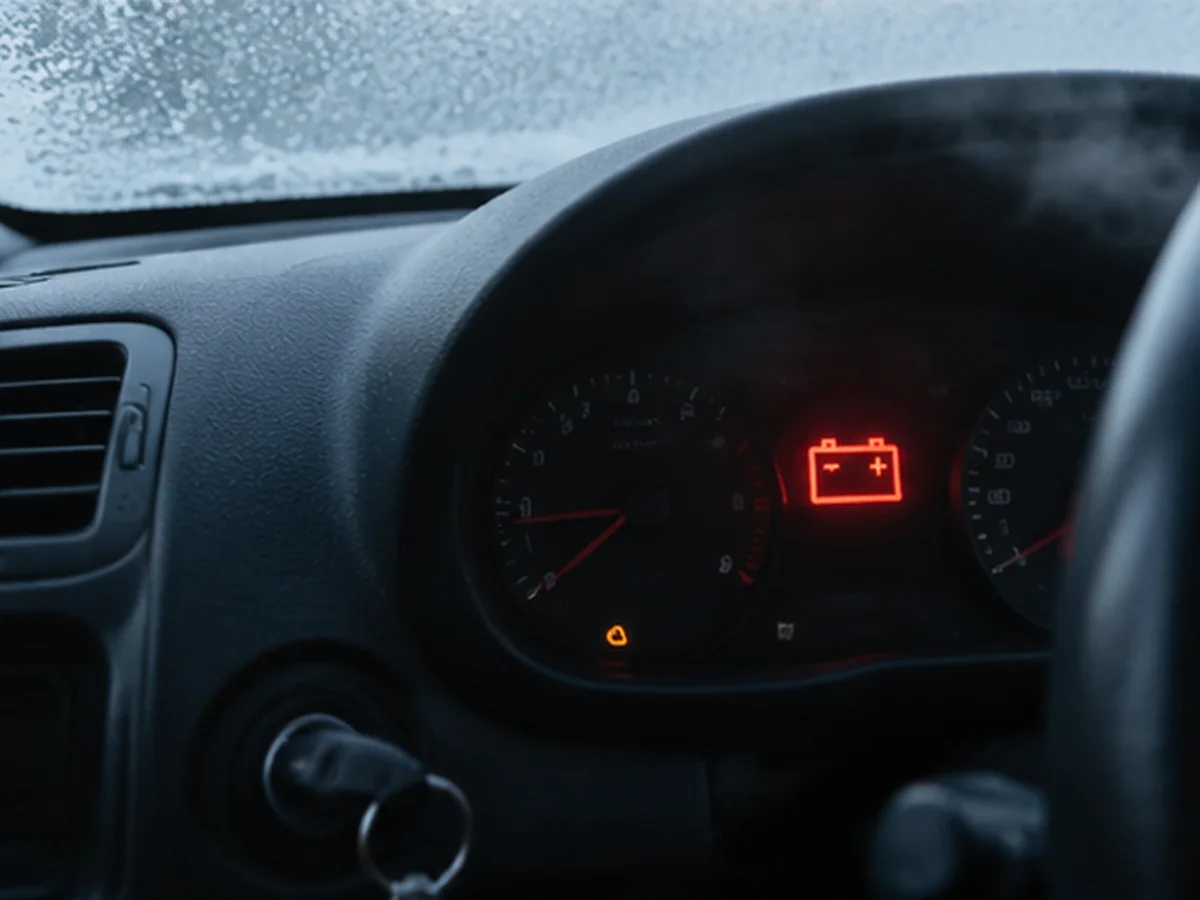
| Battery warning after the engine starts | A charging-system concern needs attention | Whether the warning remains on while the engine runs |
For an engine that turns normally but does not fire, read car will not start but the battery seems fine. Do not assume a jump start will solve a fuel, ignition or immobiliser problem.
Your stopping place decides whether any battery checks are sensible. On your drive or in a parking area, you may be able to consult the handbook and inspect the vehicle. Beside moving traffic, getting people safe comes first.
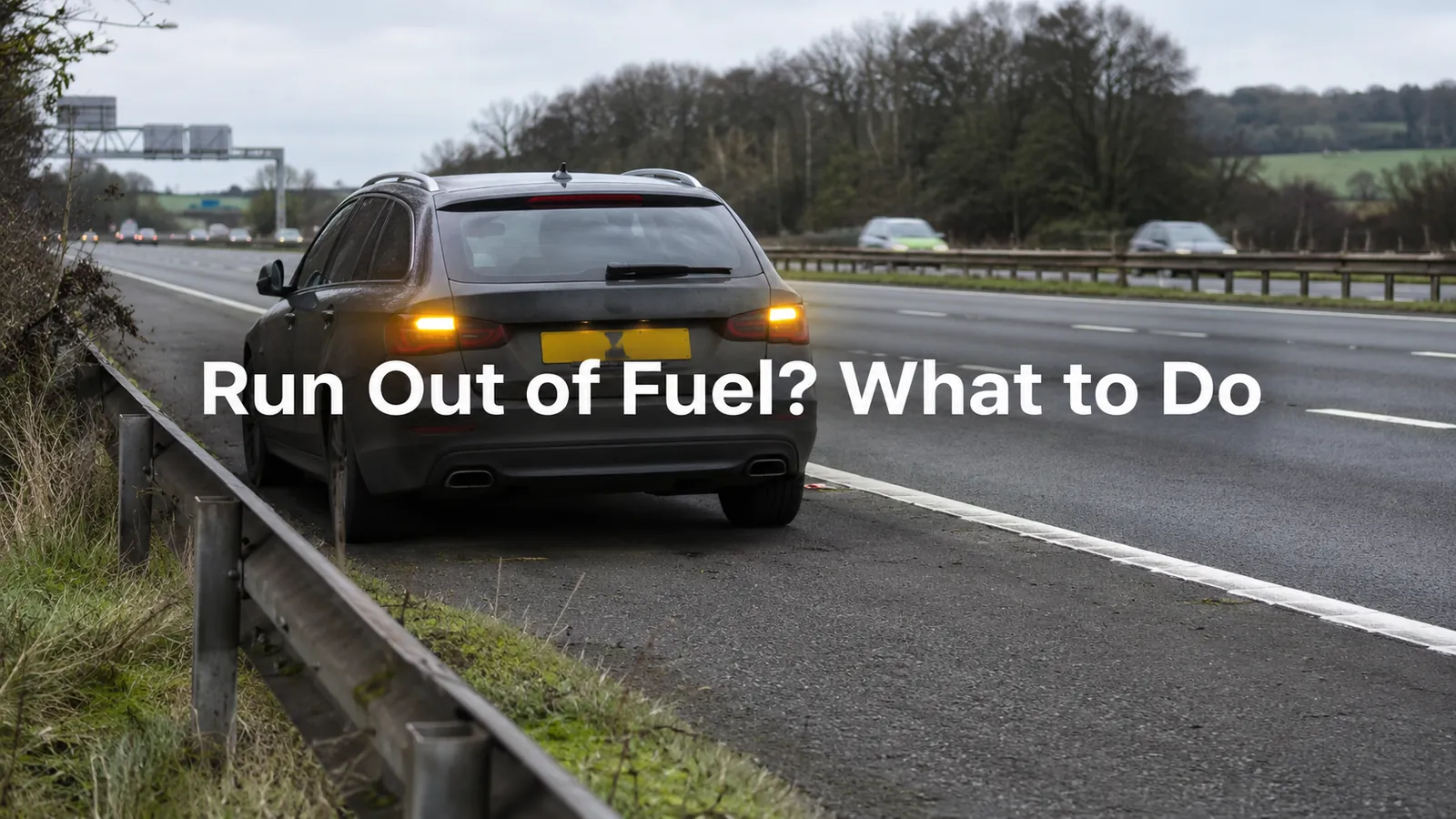
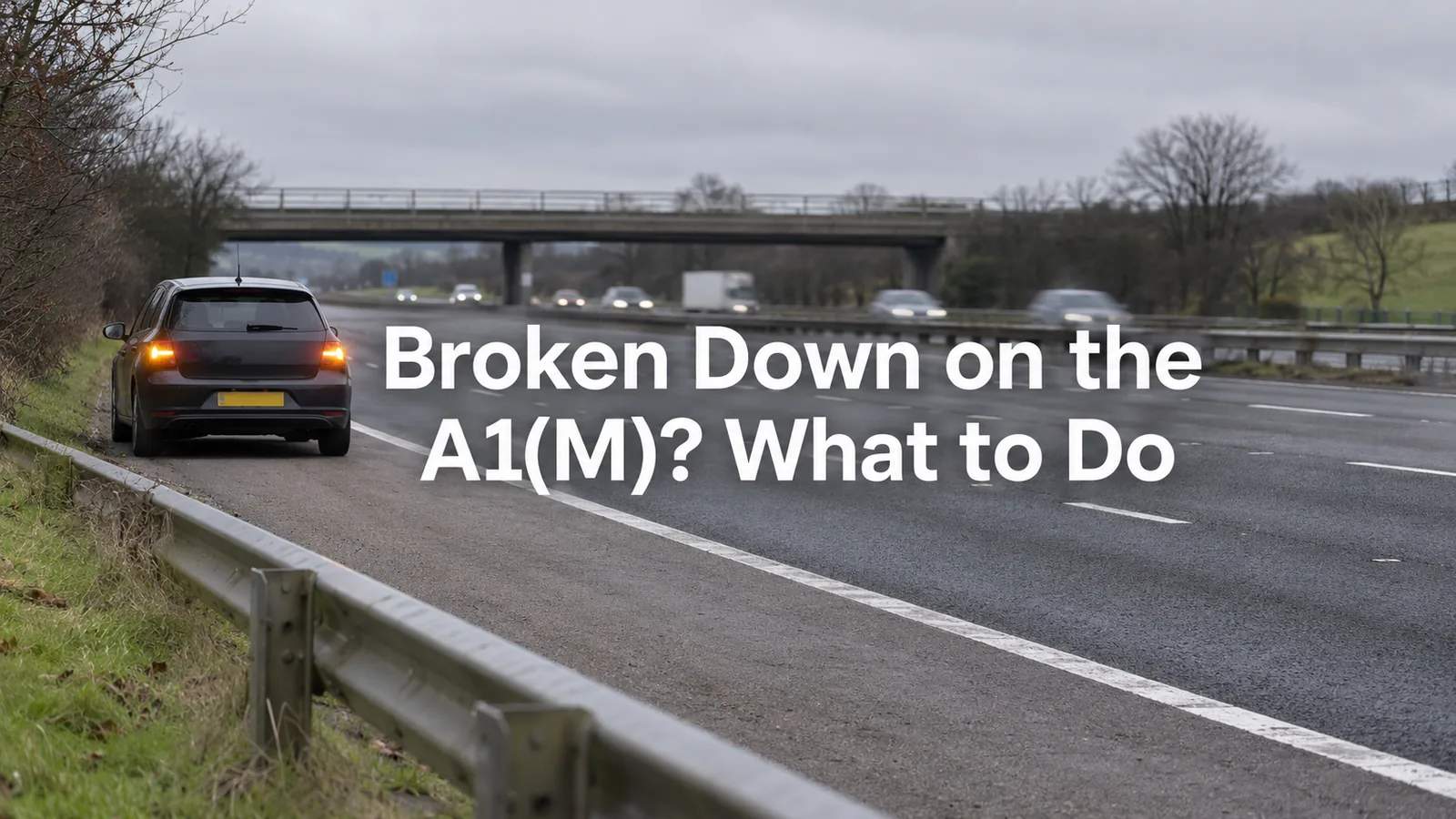
Do not attempt a jump start in a live lane or on a motorway hard shoulder. Do not place a warning triangle on a motorway or carriageway. A flat battery does not make work beside fast traffic safe.
National Highways’ motorway advice explains the emergency steps. Reach an exit or service area if the vehicle can safely continue; otherwise move left to a suitable stopping place, use hazards and leave away from traffic only if safe.
If you can leave safely, move away from the vehicle and behind a barrier where available. If you cannot reach safety or get out safely, remain belted in with hazards on and call 999 for the police. Tell the operator about any disability affecting evacuation.
On a rural North East lane, explain whether you obstruct the road and give a village, postcode or recognisable junction. Keep people away from traffic. Do not stand behind the vehicle waiting for somebody to connect leads or push it.
- Controls: check the required gear position. An automatic may need Park; a manual may require the clutch depressed. Follow the dashboard prompt or handbook.
- Accessories: turn off unnecessary heating, entertainment and charging equipment. Do not switch off hazard or side lights needed to make a roadside vehicle visible.
- Recent use: note whether the car has stood unused, made repeated short trips or had a light left on. Say if it has recently needed another jump start.
- Visible condition: look for a cracked or swollen case, leakage, damaged leads or obvious loose connections without touching exposed parts. Stop if anything looks unsafe.
Do not keep the starter working through long, repeated attempts. If the same symptom returns, you have useful information for the call. More attempts can use what charge remains without finding the cause.
If you suspect a frozen battery, do not jump start it. Do not try to warm it using improvised heat or investigate a leak yourself. Ask for professional advice instead.
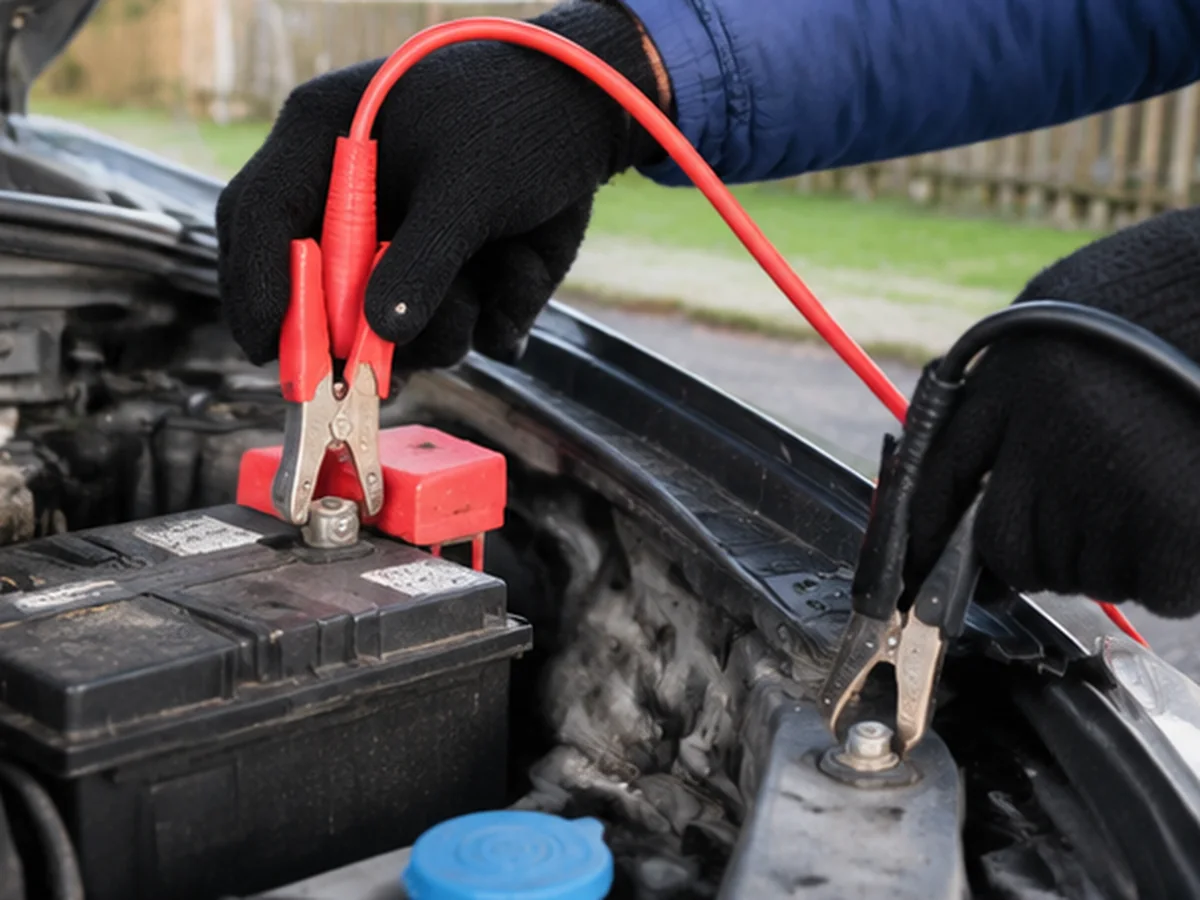
Use the instructions for the vehicle and equipment, not a universal set of timings. Some cars use designated connection points rather than direct battery terminals, and the battery may not be under the bonnet.
Which?’s jump-start guide warns against damaged leads, leaking batteries and frozen battery fluids. It also advises checking the handbook first. If the equipment or battery condition is doubtful, stop before connecting anything.
- 1. Confirm compatibility. Check the required voltage, suitable leads or jump pack, and the manufacturer’s instructions. Do not assume a larger donor vehicle or an unfamiliar pack is suitable.
- 2. Prepare a safe working space. For a permitted donor-car procedure, keep the vehicles from touching, apply parking brakes and follow the specified gear and ignition instructions.
- 3. Identify every connection point first. Find the marked positive connection and the designated earth point. If you cannot identify them confidently, request help instead of trying a clamp position.
- 4. Follow the complete sequence. Connection, starting, waiting and disconnection instructions all matter. Keep clamps apart, clear of moving parts and secure at the specified points. Do not improvise a different removal order.
- 5. Stop if the attempt does not work. A failed jump start may indicate poor battery condition or another fault. Repeated attempts are not a substitute for diagnosis.
A jump pack also needs its own instructions and correct rating. For a hybrid or electric car, check the manufacturer’s guidance for its low-voltage battery and whether it permits the proposed procedure. Do not assume it can act as a donor vehicle.
A running engine is progress, but a boost has not fully restored the battery or proved its condition. Avoid assuming that a short trip followed by another stop will leave enough charge for the next start.
Plan a suitable drive or charging arrangement in line with the handbook and the advice you receive. There is no single driving duration here that guarantees a full charge for every battery, journey or underlying fault.
If you are in an enclosed garage, do not leave the engine running there. Arrange the next safe step instead of treating idling as a charging solution. Keep checking for dashboard warnings and explain any continued problem before relying on the car.
A test can help separate a serviceable battery that lost charge from one that no longer holds it. Ask the garage or battery specialist to consider charging performance as well, particularly after repeated starting trouble.
Choose the next step from the whole situation, including where the vehicle is stopped. These are discussion points for a garage or recovery operator, not promises that a particular repair will work.
| Situation | Sensible next step |
|---|
| A light was left on and the battery previously started reliably | Discuss a suitable jump start or recharge, then check that the problem does not recur |
| Slow starting keeps returning on cold mornings | Arrange battery and charging-system tests |
| The vehicle needs repeated boosts | Investigate battery condition and the reason charge is being lost |
| The battery is damaged, leaking or possibly frozen | Do not connect leads; seek professional help |
| The engine turns normally without starting | Discuss diagnosis rather than assuming a boost is required |
| A correctly performed jump start fails | Stop repeated attempts and discuss roadside assessment or recovery |
| The vehicle is exposed to motorway traffic | Prioritise emergency safety and recovery arrangements, not battery work |
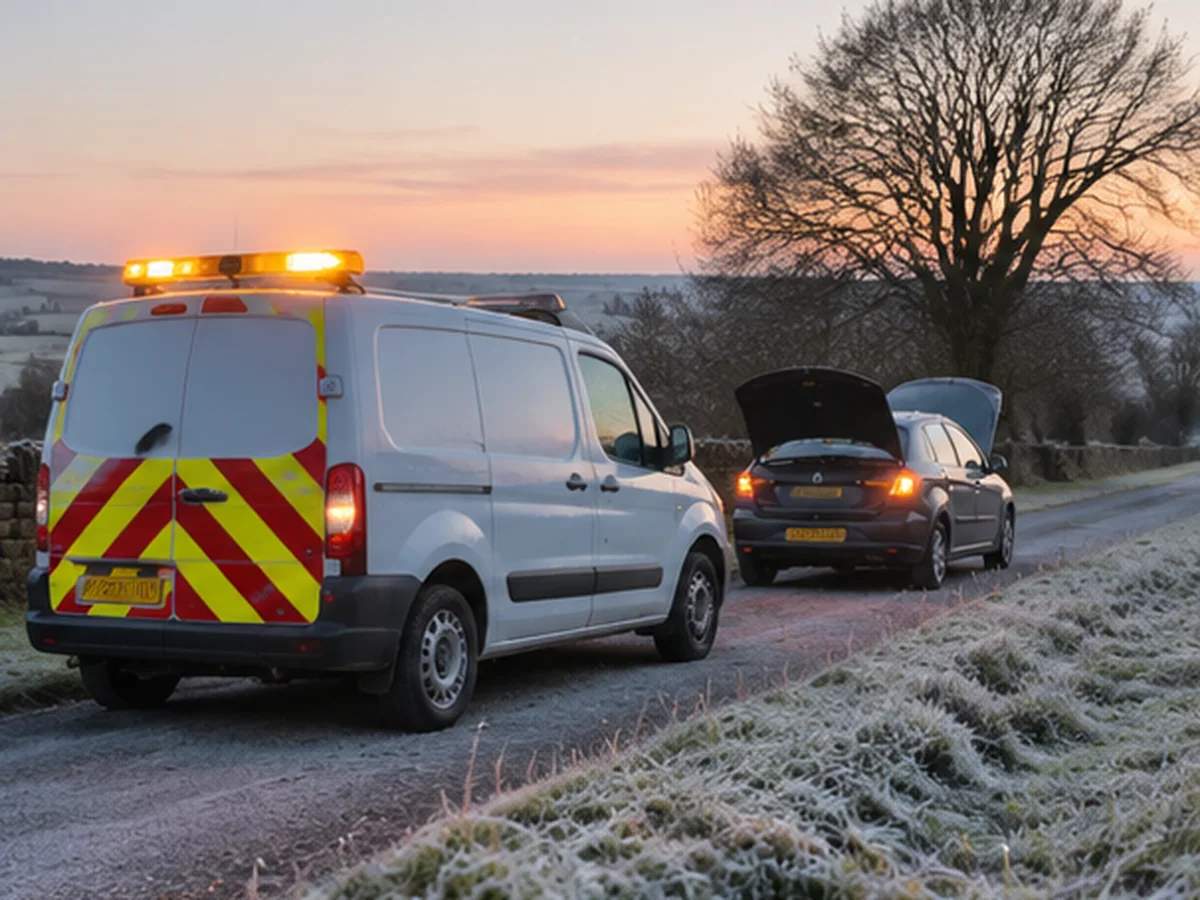
Begin with your location and whether you are safe, then describe the starting symptom. On a main road, give the direction and nearest confirmed junction or marker reference. In a car park or village, provide the postcode and access details you know.
Tell the operator the make and model, fuel type, whether it is automatic, hybrid or electric, and whether any warnings remain on. Mention previous jump starts, a recent battery change, damaged connections or anything you have already tried.
FSR Recovery Group provides jumpstart services and roadside assistance for suitable cars and light vans. Its coverage includes Durham and Middlesbrough, alongside the wider service area. Call with your actual position to confirm arrangements.
If starting assistance does not resolve the problem, vehicle breakdown recovery can be discussed. Explain your preferred garage or destination and any difficulty with rolling, steering or selecting neutral before collection is arranged.
Check that lights and accessories are off when you park. If the car mostly makes short journeys or stands for long periods, ask about an appropriate charger or maintainer and follow the vehicle and charger instructions.
Do not ignore a pattern of worsening starts. Record when it happens and arrange testing before the next essential journey. If the battery is replaced, make sure the replacement and any required setup suit the vehicle; leave that choice to a qualified provider.
Does a cold morning mean I need a new battery?
No. Cold may expose low charge or an existing weakness, but starting trouble can have other causes. A suitable boost may help a discharged battery. Repeated problems need testing of the battery and charging system before deciding on replacement.
What signs suggest the battery is flat?
Slow turning, repeated clicking and lights that dim during a starting attempt can point towards low available power. Connections or other faults can produce similar symptoms. Tell the operator exactly what you hear and see rather than treating one sign as a diagnosis.
Is a frozen battery safe to jump start?
No. Do not attempt a jump start if the battery fluids may be frozen. Stop for damaged or leaking batteries and leads too. Follow the handbook and seek professional advice when the condition or correct procedure is uncertain.
Can I jump start on the A1(M) hard shoulder?
No. Do not carry out jump-start work on a motorway hard shoulder or live carriageway. Get clear of traffic if safe. If you cannot reach safety or leave safely, stay belted in with hazards on and call 999 for police assistance.
How long should I drive after a boost?
There is no guaranteed duration that suits every vehicle and battery. A short trip may leave too little charge for another start. Follow the handbook and professional advice about driving or charging, and have repeated failures investigated rather than relying on another boost.
Can hybrid and electric cars have flat starting batteries?
Yes, their low-voltage systems can lose charge too. Procedures depend on the model and must follow the manufacturer’s guidance. Explain the vehicle type when calling. Do not assume the same connection points or donor-car procedure apply to every hybrid or electric car.
What if the car still refuses to start after a jump?
Stop repeated attempts and describe the result to a professional. The battery may be unsuitable for a boost, or another fault may prevent starting. Roadside assessment or recovery to an agreed destination can be discussed once the location is safe.
For help with a car that will not start around Darlington, County Durham, Teesside or North Yorkshire, call FSR Recovery Group on +44 7888 502989 once you are safe. WhatsApp the same number with your location and vehicle details if appropriate.
The base is 135 Gladstone Street, Darlington DL3 6LB, and roadside assistance is available 24/7. Use the contact page for other enquiries. For more practical guidance, visit the FSR Recovery Group blog.