Last updated: 23 November 2026.
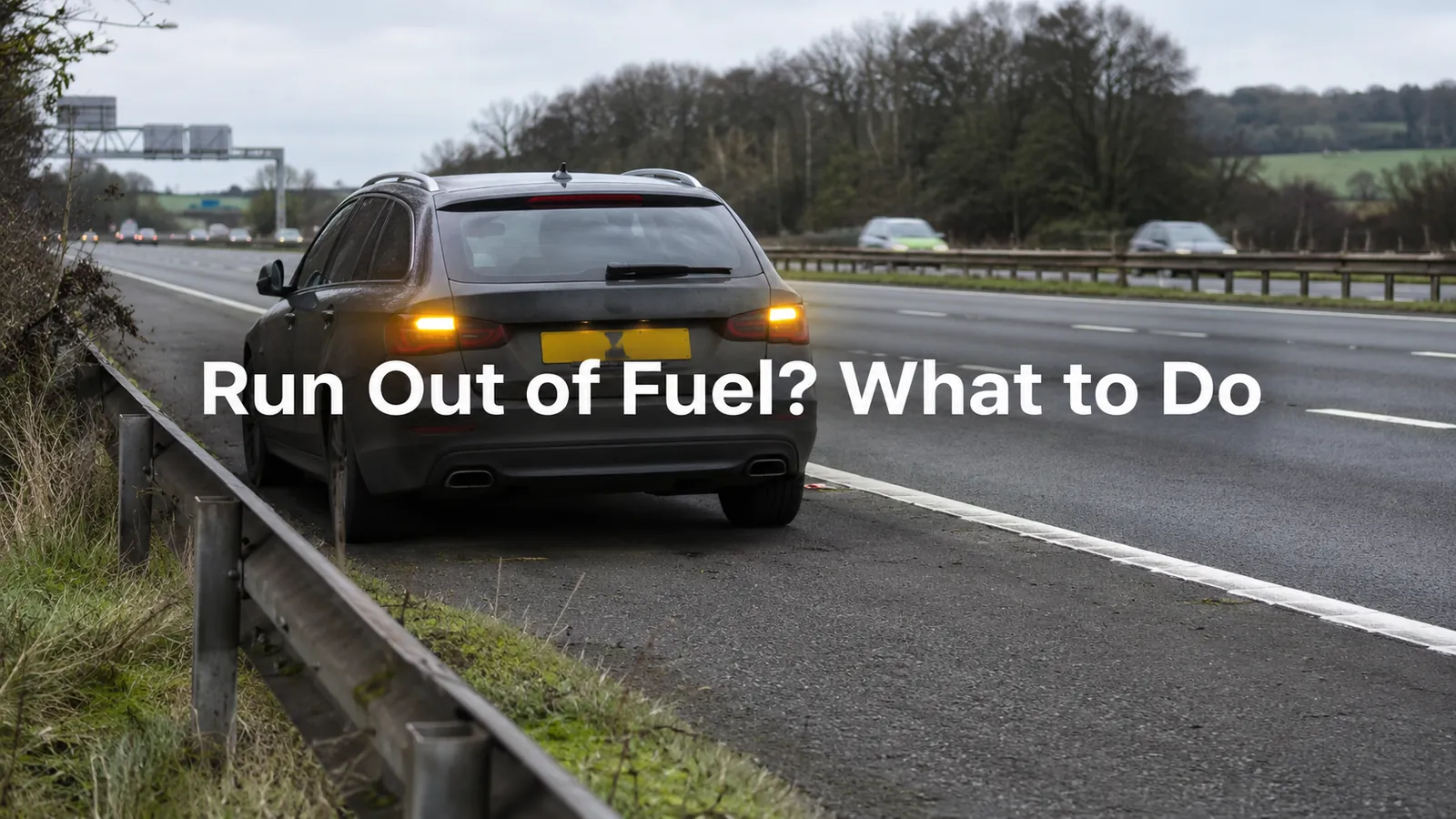
A low-fuel warning is inconvenient. Losing power before you reach a filling station is a breakdown, and the place where you stop matters more than getting another few litres into the tank. That is especially true beside fast North East traffic.
Use this guide to decide what to do while the car still moves, what changes when it stops, and what help to request. It covers motorway journeys, A-roads and rural lanes around Darlington, County Durham, Teesside and North Yorkshire.
Deal with your position on the road before arranging fuel. An apparently simple empty tank does not make a hard shoulder, live lane or narrow verge a safe place to work.
- 1. If you can still drive safely, leave the traffic stream. Aim for an exit, service area or suitable stopping place. Do not keep passing safer options because you hope to reach a preferred filling station.
- 2. If you must stop, make yourself visible. Switch on hazard lights. Use sidelights in darkness or poor visibility, and stop as far left as you can while leaving room to get out.
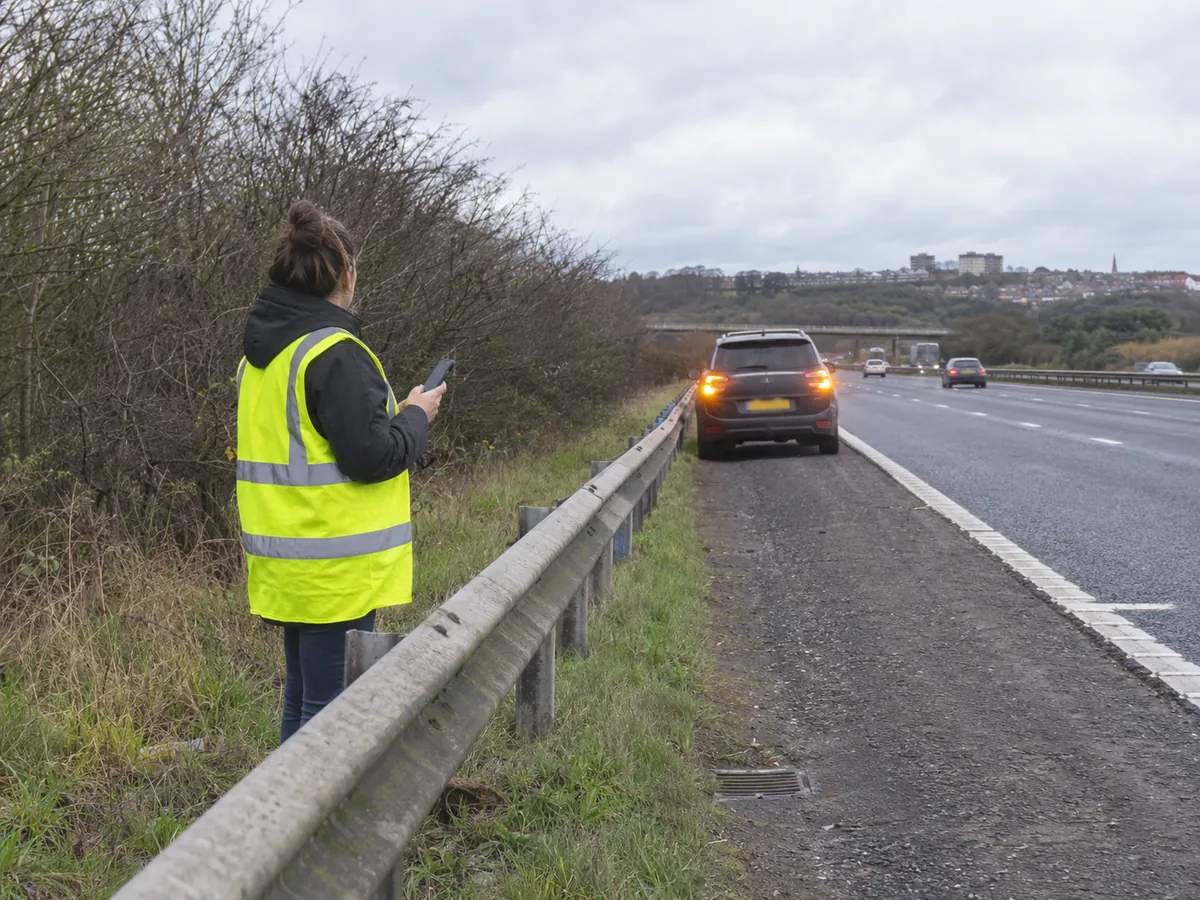
- 3. Decide whether leaving is safe. On a high-speed road, use the side away from traffic and move well clear, behind a barrier where available. Do not stand beside the vehicle to inspect it.
- 4. If you cannot get clear safely, call 999 for the police. Stay in the vehicle with seat belts fastened and hazards on. Use its SOS button if available.
- 5. When you are safely clear, arrange help. Report your road, direction and stopping place. Explain that you suspect an empty tank rather than assuming fuel alone will solve the problem.
If you need roadside assistance once you are safe, call FSR Recovery Group on +44 7888 502989. Make the emergency call first if your position puts you in danger.
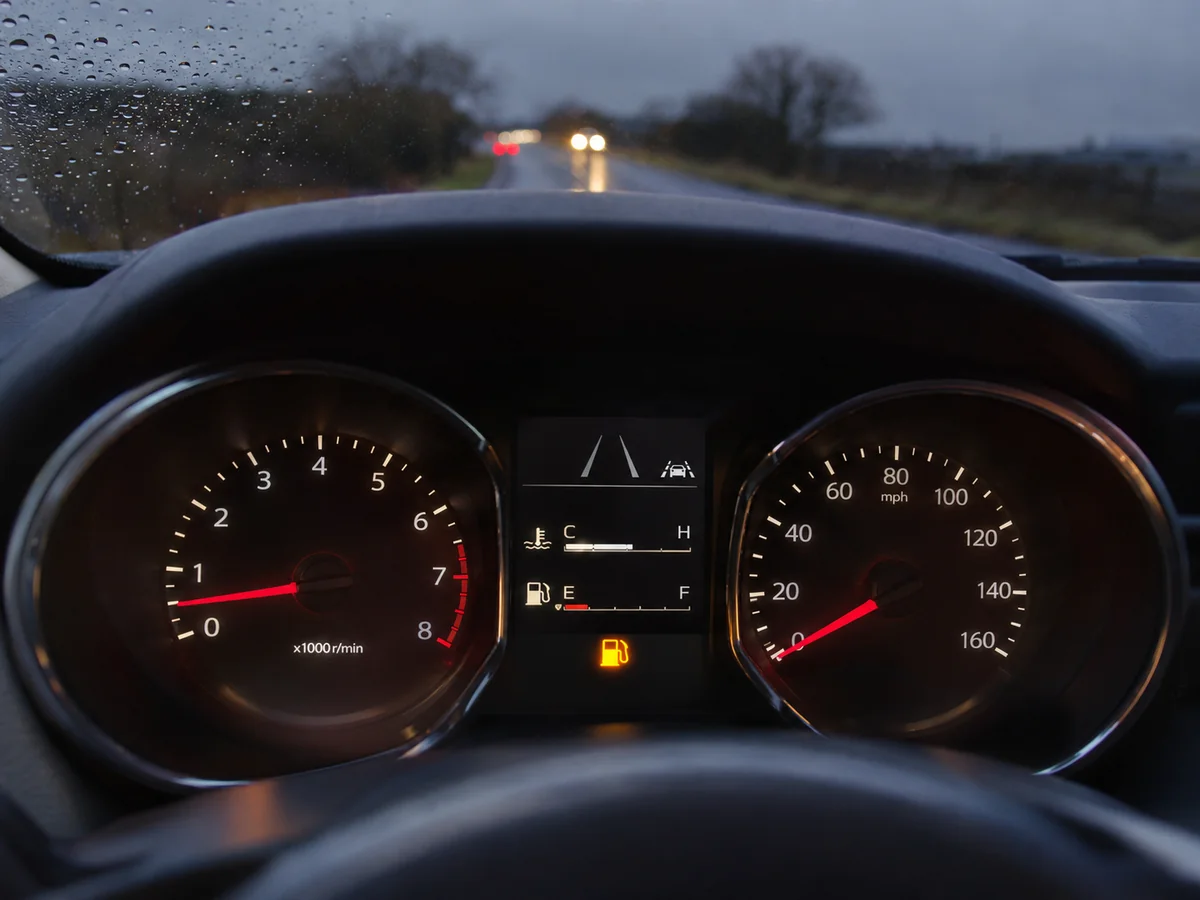
Treat a low-fuel warning as a reason to plan a fuel stop now, not as a promise of remaining mileage. A displayed range is not a safe allowance for an extra detour, another junction or a queue.
Check the route to a suitable filling station while safely parked, or ask a passenger to help. Do not use a handheld phone while driving. If a planned stop is unavailable, reassess the journey rather than carrying on towards another uncertain option.
Around the North East, the route may lead from motorway services onto an A-road or into a village. Know which road the filling station is actually on. Seeing its name on a map does not mean you can reach it directly from your carriageway.
If the engine begins to hesitate or lose power, concentrate on reaching a safer stopping place. Do not try to prove how much fuel remains by continuing past an exit or pull-in. Once stopped, explain the warning and symptoms on the call.
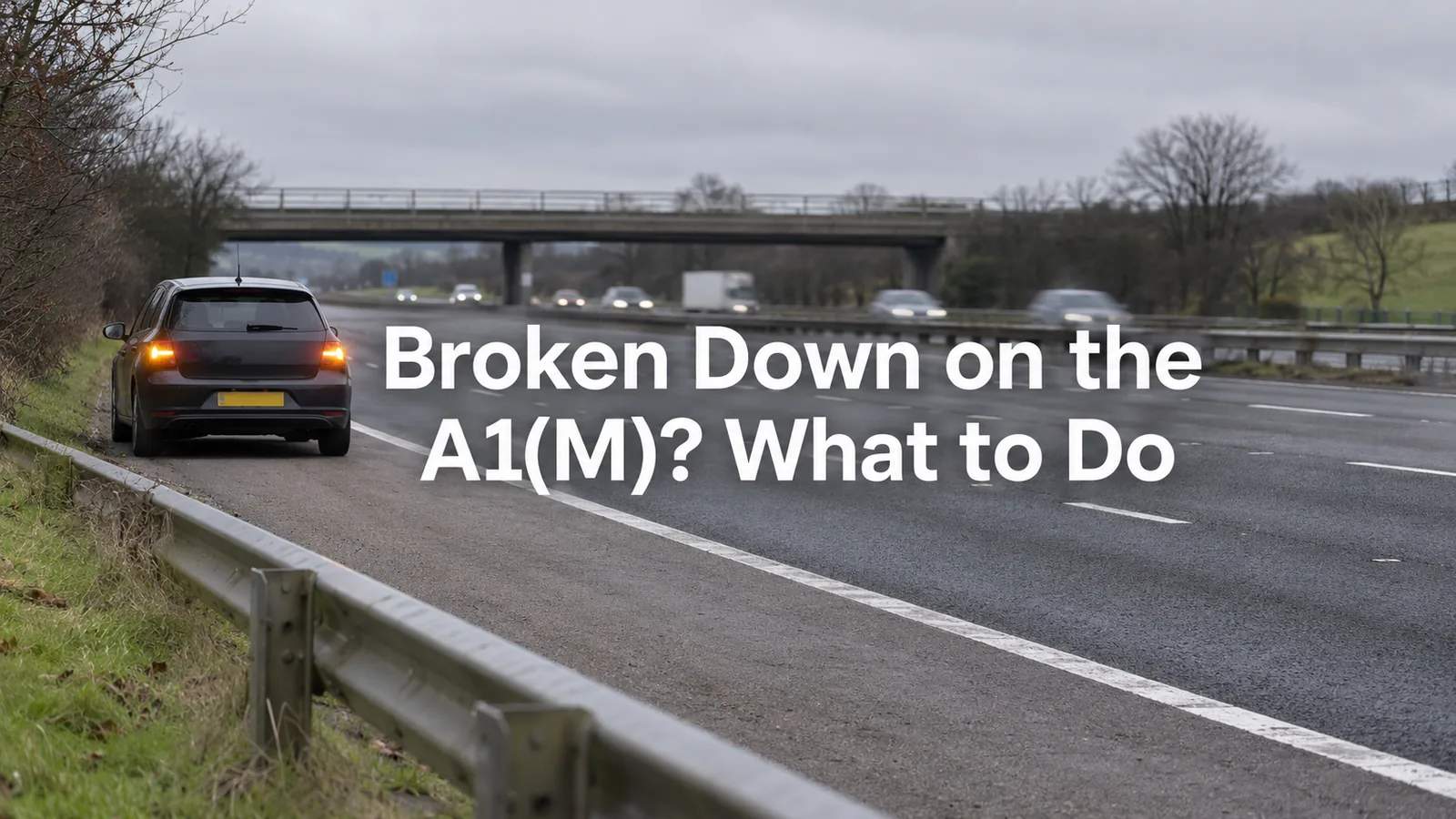
An empty tank on the A1(M) needs the same safety response as another motorway breakdown. National Highways’ motorway guidance puts reaching safety ahead of roadside repairs.
- 1. Leave the carriageway if you can. Use the next exit or service area where possible. If you cannot leave, move left towards an available hard shoulder or emergency area rather than stopping in a live lane unnecessarily.
- 2. Stop with space to leave. Get as far left as possible, turn your wheels left and switch on hazards. Add sidelights if it is dark or visibility is poor.
- 3. Get away from traffic if safe. Everyone should leave on the side furthest from passing vehicles. Move well away from the car, behind a barrier if there is one, watching for drops, debris and uneven ground.
- 4. Report where you are. From safety, use an emergency telephone where provided or contact National Highways on 0300 123 5000. Contact a recovery operator as well and face traffic while speaking.
Do not put out a warning triangle on a motorway or carriageway. Do not walk along the motorway to a filling station, even if a sign or map makes it look close. Do not attempt a repair while waiting.
If you cannot get off the live road and leave safely, stay belted in with hazards on and call 999 for the police. A disability that prevents you reaching safety also needs to be explained during that emergency call.
For more about this route, see what to do after an A1(M) breakdown. Our A1(M) area page covers the road within FSR Recovery Group’s service area.
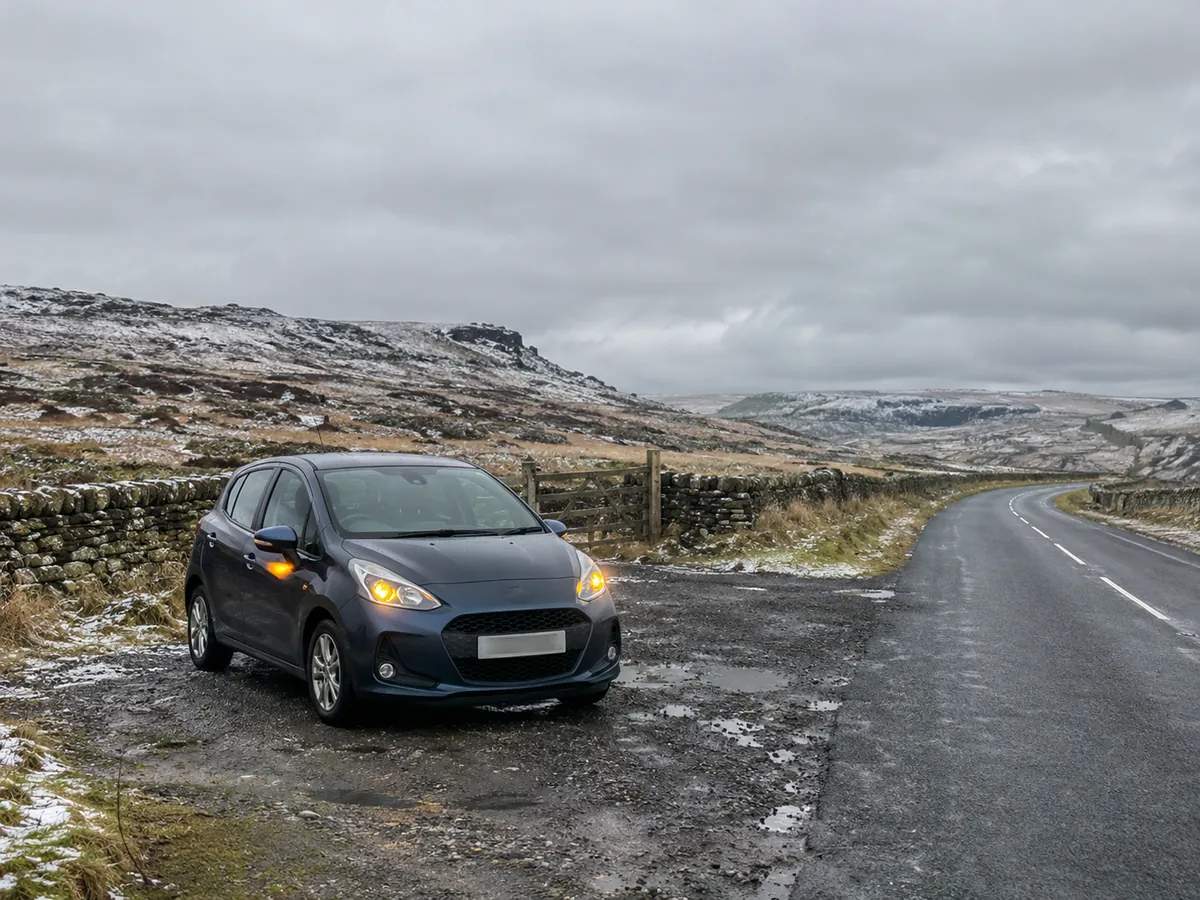
Away from the motorway, choose the safest available stopping place rather than assuming a verge or gateway is suitable. Get the vehicle off the carriageway if possible, use hazards and keep people away from passing traffic.
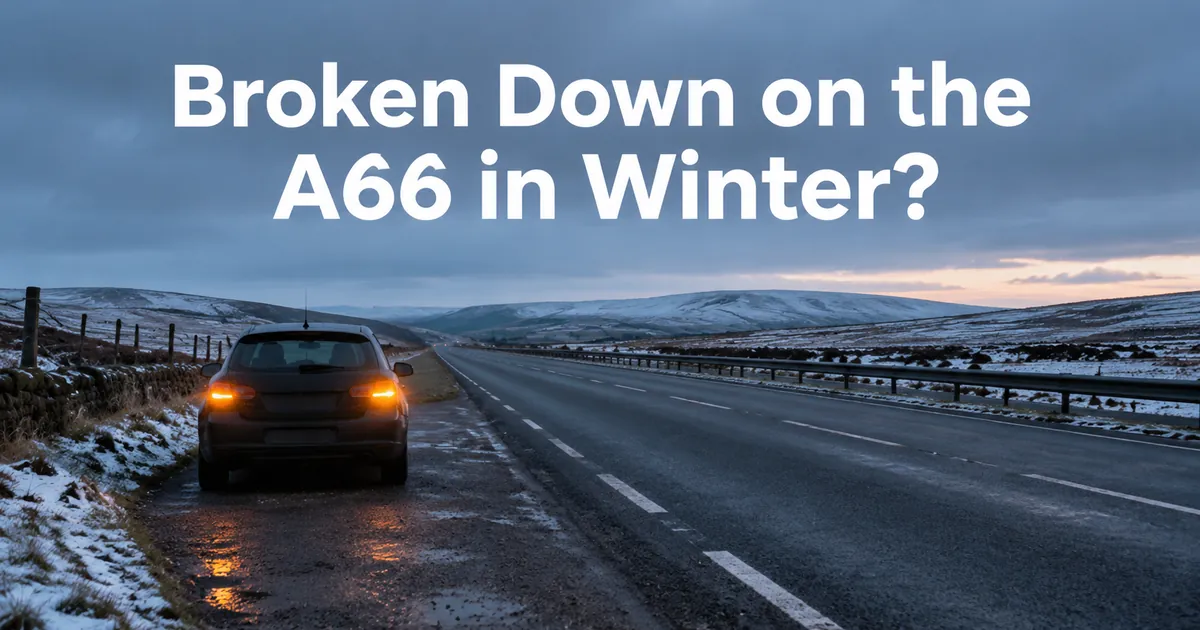
The A19 and A66 are useful road names to give an operator, but add your direction and nearest landmark. “A66 eastbound in a lay-by” describes a different collection from a vehicle still obstructing a lane.
On a narrow country lane, report a village, postcode, farm entrance or recognisable junction if you know it. Say whether your car blocks the road. Do not move into a muddy verge simply because it appears to offer extra width.
The Highway Code’s breakdown rules explain visibility and places of relative safety. In particular, avoid standing between your vehicle and approaching traffic. Do not stand where you hide its lights from other drivers.
If you leave the vehicle safely, wait well clear rather than gathering at the boot. Keep children under control. On an exposed road in cold or wet weather, tell the operator about anyone who needs additional help while waiting.
If your position is dangerous or somebody is injured, call 999. Describing it as an out-of-fuel call does not reduce the danger from traffic. Tell the emergency operator about the road and obstruction before discussing the fuel problem.
Avoid trying to fix the fuel problem by creating another roadside risk. The next useful step is a clear call from safety, not a walk into traffic or repeated attempts to restart.
- Do not go looking for fuel along a motorway or fast carriageway. A nearby filling station on a map is not an invitation to walk there.
- Do not push the car in a live lane. Contact the emergency services if you cannot reach safety. Other drivers need to see an obstruction, not people trying to manoeuvre around it.
- Do not keep cranking the engine. Repeated attempts can use the battery without resolving the missing fuel. Tell the operator how often you have tried.
- Do not guess the fuel type. Check the vehicle information if you can do so safely. Explain any doubt before somebody brings fuel.
- Do not improvise with a drink bottle or another unsuitable container. Fuel needs suitable handling and equipment. Discuss the help available rather than asking somebody to bring it in whatever is at hand.
- Do not promise yourself it will restart. An empty gauge is useful information, but another fault may also be involved. Describe the symptoms instead of ruling out recovery before anyone has assessed the vehicle.
Petrol, diesel, wrong fuel and electric cars need different conversations
Tell the operator what powers the vehicle and what happened before it stopped. “It needs fuel” leaves out information that can change the next step.
Petrol: adding the correct fuel may allow a suitable vehicle to restart. That is a possibility, not a guarantee. Report other warnings, unusual noises or a sudden stop that did not seem connected to the gauge.
Diesel: a vehicle that has run completely dry may need more than fuel before it starts again. Procedures vary, so consult the handbook and explain the situation. Do not try unfamiliar work on the fuel system beside traffic.
Wrong fuel: putting the wrong fuel into the tank is a separate problem. If you have not started the engine, do not start it. Tell the operator what went in and whether the engine has run so appropriate help can be discussed.
Electric car: running out of charge calls for a different assessment from petrol or diesel assistance. Give the make and model, your location and any warning messages. Do not assume that an emergency refuelling service provides roadside charging.
If the engine turns over but will not run and you are unsure why, our guide to a car that will not start despite the battery seeming fine explains other possibilities. Save those checks for a safe location.
Start your call with where the vehicle is, then describe the fault. A precise stopping place lets an operator distinguish a car in a parking area from one exposed to moving traffic.
Give the details you know, without walking towards the road to collect missing information:
- Road number and direction: for example, A1(M) northbound or A66 westbound.
- The last confirmed junction, village or place name; say if you are unsure.
- Letters and numbers on any driver location sign or marker post visible from safety.
- Your stopping place: service area, emergency area, hard shoulder, lay-by, verge or live lane.
- A map pin you can share safely, plus where you and your passengers are waiting.
Distinguish your current position from your intended destination. A journey towards Darlington or Middlesbrough does not mean you stopped near either place. Explain if you left a main road and are now on a slip road or local route.
FSR Recovery Group’s coverage page lists the service area. Call with your actual location to confirm arrangements.
FSR Recovery Group’s emergency refuelling service supports genuine out-of-fuel situations involving suitable cars and light vans. It is available 24/7, with assistance depending on the vehicle and whether the stopping place is accessible and safe to work at.
Expect to discuss the vehicle’s make, model and correct fuel, together with the symptoms and location. Say if you have already tried restarting, added fuel or noticed another warning. Explain whether anybody travelling with you needs extra support.
Where appropriate, the aim is enough fuel to restart and continue to a nearby filling station or suitable destination. It is not a replacement for planning the next fuel stop. Agree the next step before setting off again.
If the vehicle still will not start, discuss roadside assistance or vehicle breakdown recovery. A battery weakened by repeated attempts may also be relevant, but jumpstart services should not be treated as proof that the underlying fault is resolved.
Plan fuel stops before the tank becomes a concern, particularly when travelling late or using rural routes. Allow room in the plan for a closed station, a diversion or a longer journey than expected.
Check fuel before departure, alongside knowing where you intend to stop. On an unfamiliar route, identify an alternative while you are safely parked. Do not rely on being able to turn around or cross to a station on the opposite carriageway.
After roadside fuel assistance, make refuelling the next practical task. Postponing it to finish the journey can recreate the same problem. If warnings or poor running continue, seek advice rather than assuming that every symptom came from an empty tank.
What comes first if I run out of fuel on the A1(M)?
Reach an exit or service area if safe. Otherwise move left, use hazards and leave away from traffic only if you can get clear safely. If you cannot, stay belted in and call 999 for the police before arranging fuel assistance.
Can I walk to a petrol station from the motorway?
No. Do not walk along the motorway or a fast carriageway to collect fuel. Wait somewhere safer, away from your vehicle and traffic if you can leave safely, and arrange assistance. A short distance on a map does not make the walk safe.
Should I use a warning triangle after running out of fuel?
Do not place a warning triangle on a motorway or carriageway. Use hazard lights and concentrate on getting people clear where safe. Report the vehicle’s position so the operator understands the danger rather than stepping into traffic to warn other drivers.
Does adding fuel always restart the car?
No. Correct fuel may help, but a diesel that has run dry or a vehicle with another fault may need further attention. Explain what happens when you try to start it. Recovery can be discussed if the vehicle cannot safely continue.
What if I have put in the wrong fuel?
Say so immediately; that is different from an empty tank. Do not start the engine if you have not already. Explain the fuel added and whether you have driven since, so the operator can discuss suitable assistance without assuming ordinary refuelling will help.
Can I contact FSR Recovery Group overnight?
Yes. FSR Recovery Group provides 24/7 assistance for suitable out-of-fuel situations. Call with your location, vehicle and fuel details so arrangements can be confirmed. If you are trapped in danger, call 999 first rather than waiting for a recovery booking.
Once you are safe, call FSR Recovery Group on +44 7888 502989 or WhatsApp the same number. Begin with your location and direction, then describe the vehicle, fuel type and what happened. Mention passengers who need additional support.
FSR Recovery Group is based at 135 Gladstone Street, Darlington DL3 6LB. For other enquiries, use the contact page. Give clear details so the operator can confirm what help is appropriate for your stopping place and vehicle.